



The best areas to buy houses in Alberta in 2026 include Calgary for its robust economic growth and urban amenities, Edmonton for unmatched affordability and tech sector expansion, and Canmore for premium lifestyle investments. These regions offer a compelling mix of high median household incomes, diverse employment opportunities, and housing prices that remain significantly below the national average. Whether you are a first-time homebuyer seeking a family-friendly community or an investor looking for strong rental yields, Alberta’s diverse real estate landscape provides strategic advantages unmatched by other Canadian provinces.
Key Takeaways
- Population Surge: Alberta’s population has surpassed 4.8 million in 2026, driving unprecedented demand for both residential and multi-unit housing.
- Economic Diversity: Job growth spanning energy, technology, and healthcare supports long-term real estate stability.
- Market Affordability: Edmonton and regional hubs like Red Deer offer entry-level pricing up to 20% below the national average.
- Investment Yields: High rental demand and low vacancy rates in major urban centers create favorable capitalization rates for property investors.
- Infrastructure Expansion: Billions invested in transit and community connectivity are elevating property values in emerging suburban neighborhoods.
The 2026 Alberta Real Estate Landscape
Alberta’s property sector is currently thriving at the intersection of economic strength and surging demographic demand. As of 2026, the province has solidified its position as Canada’s fastest-growing region. According to data from Statistics Canada, interprovincial migration and international immigration have pushed the provincial population past 4.8 million. This influx is equivalent to adding a mid-sized city to the province every single year, fundamentally altering the housing supply and demand matrix.
To keep pace with this rapid expansion, residential construction has accelerated dramatically. Builders have initiated over 46,000 new residential units this year alone, reflecting immense confidence in the province’s long-term economic prospects. This construction boom is not just about volume; it represents a shift toward sustainable, community-focused urban planning. Buyers are increasingly prioritizing areas that offer a seamless blend of career opportunities, recreational access, and financial prudence.
Before diving into specific municipalities, it is crucial to understand the broader comprehensive market analysis shaping property values. Transaction volumes are projected to climb steadily, signaling sustained buyer activity. Meanwhile, rental markets have tightened significantly, with vacancy rates hitting historic lows across major urban centers, making the province a highly attractive landscape for real estate capital allocation.
Top Cities for Property Investment and Homeownership
Alberta’s diverse communities present distinct advantages for homeowners and investors alike. Choosing the right location requires aligning your personal lifestyle preferences with rigorous financial metrics. Here is an in-depth look at the premier markets dominating the province in 2026.
Calgary: The Economic Engine
Calgary’s housing market thrives as population growth and urban development converge. Over 200,000 newcomers have arrived in the metropolitan area over the past few years, fueling intense demand for diverse residential options. The city’s benchmark property price currently sits at approximately $583,300, reflecting strong annual appreciation while remaining accessible compared to Toronto or Vancouver.
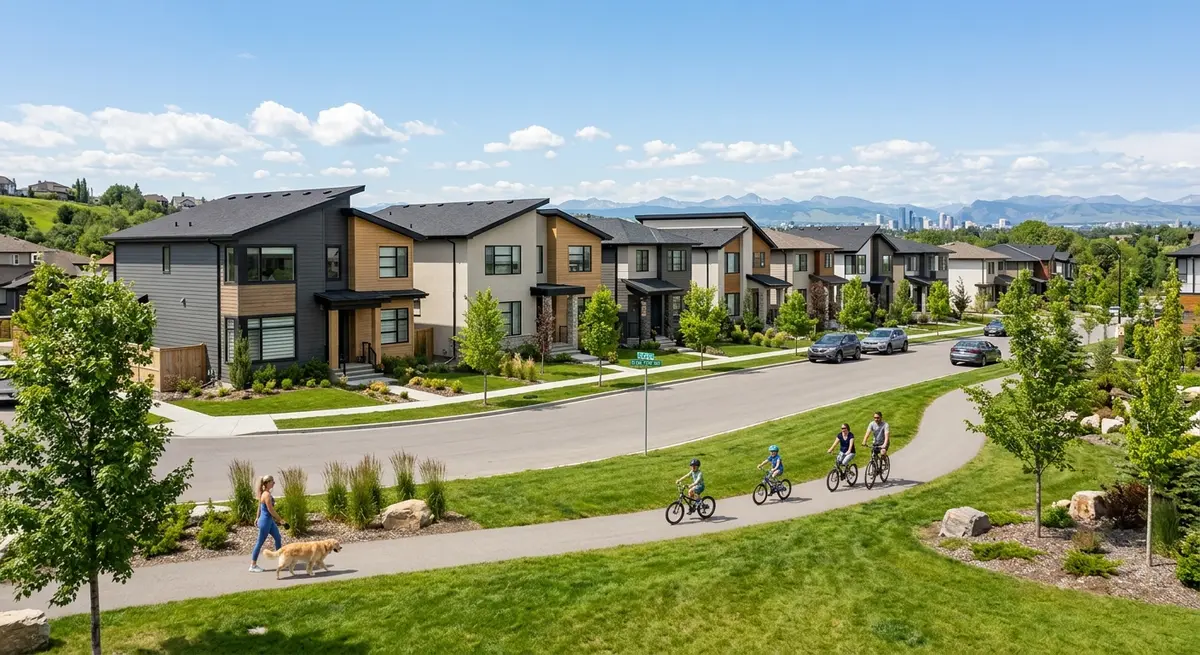
Residents of Calgary enjoy over 8,000 hectares of parkland and a highly walkable urban core. Infrastructure upgrades, particularly the expansion of the Green Line LRT, are improving regional connectivity and boosting property values in adjacent suburban corridors. For those relocating with dependents, exploring the family-friendly neighborhoods in the city’s southwest and northwest quadrants reveals excellent school districts and community amenities.
Edmonton: Affordability and Tech Growth
Edmonton’s transformation into a modern metropolis shines through its blend of cultural vibrancy and economic resilience. As the provincial capital, Edmonton offers a unique value proposition: high median incomes paired with exceptionally low housing costs. Detached homes average around $580,234, while modern apartments can be secured for under $300,000.
The city is experiencing a massive tech sector expansion, with local startups raising record capital in 2026. This economic diversification is attracting a young, educated workforce. Investors are particularly drawn to Edmonton due to its high capitalization rates (cap rates) on rental properties. For a deeper dive into these metrics, reviewing specific Edmonton property market insights is essential for strategic portfolio growth.
Canmore and Banff: Premium Alpine Markets
Mountain communities like Canmore and Banff redefine alpine living through unmatched access to nature and curated outdoor experiences. These destinations attract residents seeking adventure alongside financial stability. However, these are exclusive markets with lasting value; limited development opportunities and strict zoning bylaws create highly competitive real estate environments.
Canmore’s average home price exceeds $1.2 million, reflecting the intense demand for properties situated near national parks. Banff’s luxury condominiums appeal heavily to investors capitalizing on the region’s massive tourism industry. Both markets maintain their premium valuations through rigorous environmental building regulations and an enduring natural appeal that draws global buyers.
Emerging Regional Hubs: Leduc and Red Deer
While the major cities capture headlines, secondary markets like Leduc and Red Deer are emerging as strategic investment frontiers. Positioned along the vital QEII Highway corridor, these cities offer logistical advantages for industrial and agricultural tech businesses. Housing in these areas provides excellent debt service coverage ratios (DSCR) for investors, as purchase prices remain low while rental demand from the local workforce continues to climb.
Comparing Alberta’s Major Housing Markets
To facilitate a clear understanding of how these regions stack up against one another, the following table outlines key metrics for Alberta’s primary real estate markets in 2026.
| City / Region | Avg. Detached Price | Primary Economic Driver | Market Vibe | Best Suited For |
|---|---|---|---|---|
| Calgary | $720,500 | Energy, Finance, Tech | Fast-paced, Corporate | Career professionals, Urban families |
| Edmonton | $580,200 | Government, Healthcare, Tech | Cultural, Relaxed | First-time buyers, Yield investors |
| Canmore | $1,350,000 | Tourism, Remote Work | Alpine, Luxurious | Luxury buyers, Retirees |
| Red Deer | $415,000 | Logistics, Agriculture | Suburban, Industrial | Value investors, Local workforce |
Economic Drivers Fueling Housing Demand
The foundation of any strong real estate market is a robust local economy. Alberta’s $339.3 billion GDP outpaces most Canadian provinces, driven by a strategic pivot toward economic diversification. While the traditional energy sector remains a global powerhouse, generating substantial provincial revenue, the technology, renewable energy, and agritech sectors are creating over 74,000 new jobs annually.
“Alberta’s economic diversification has fundamentally shifted housing demand,” notes Dr. Elena Rostova, Senior Demographic Analyst at the Western Canadian Economic Bureau. “We are no longer solely dependent on energy cycles; tech and logistics are driving sustained interprovincial migration, creating a highly resilient housing market.”
According to the Government of Alberta Economic Dashboard, the province leads the country in employment growth. This economic vitality translates directly into real estate absorption rates. When high-paying jobs are plentiful, consumer confidence rises, leading to increased homeownership rates and a willingness to invest in long-term property assets.

How to Choose the Right Lot and Location
Identifying the best city is only the first step; selecting the specific parcel of land or neighborhood dictates your daily lifestyle and future property appreciation. Whether you are buying a move-in ready home or planning a custom build, a systematic approach is required.
- Analyze Zoning and Future Land Use: Review municipal development plans. A quiet street today might be zoned for high-density commercial use tomorrow. Understanding local zoning bylaws protects your investment.
- Evaluate Infrastructure Proximity: Properties located within a 15-minute walk of major transit hubs, such as Calgary’s LRT stations, historically appreciate faster than isolated suburban homes.
- Assess Topography and Soil Conditions: If you are building new, the physical land matters. Sloping lots may offer walkout basements but require expensive retaining walls. Selecting the ideal building lot involves geotechnical considerations to prevent future foundation issues.
- Review Builder Guidelines and HOAs: Many master-planned communities in Alberta enforce strict architectural controls. Ensure these guidelines align with your aesthetic preferences and budget constraints.
Navigating New Construction vs. Resale Properties
With the 2026 building boom in full swing, buyers face a critical decision between purchasing an existing home or investing in new construction. Resale homes offer established neighborhoods, mature landscaping, and immediate possession. However, they may require immediate capital expenditures for roof replacements, HVAC upgrades, or cosmetic renovations.
Conversely, new builds provide modern floor plans, superior energy efficiency, and comprehensive warranty protection under the Alberta New Home Buyer Protection Act (covering 1 year for labor/materials, 2 years for delivery systems, 5 years for building envelope, and 10 years for structural defects). When weighing new construction against resale properties, buyers must factor in the cost of modern building materials versus the maintenance costs of older homes.
“The 2026 building code updates have transformed residential construction,” states David Chen, a certified Alberta building inspector. “Modern properties now achieve unprecedented thermal efficiency, significantly reducing long-term carrying costs for homeowners compared to stock built even a decade ago.”
If opting for a new build, due diligence is paramount. Always prioritize verifying builder credentials, checking past project completions, and reading third-party reviews to ensure your deposit is secure and the final product meets expectations.
Financing and Investment Strategies for 2026
Securing property in Alberta requires a nuanced understanding of the current financial landscape. Interest rates, while stabilizing, demand strategic mortgage planning. Buyers should explore various amortization periods and fixed versus variable rate structures to optimize their monthly cash flow.
For real estate investors, the focus has shifted toward multi-unit residential properties and purpose-built rentals. The Canada Mortgage and Housing Corporation (CMHC) offers several advanced financing programs that reward developers and investors who prioritize energy efficiency, accessibility, and affordable housing criteria. By meeting these specific national standards, investors can access extended amortization periods and reduced insurance premiums, drastically improving the viability of large-scale projects.
Furthermore, Alberta remains the only province in Canada without a provincial sales tax (PST) or a land transfer tax, significantly reducing the closing costs associated with property acquisition. Whether you are a first-time buyer utilizing federal tax credits or a seasoned investor leveraging equity, navigating home financing options with a qualified local broker is the key to maximizing your purchasing power.

Frequently Asked Questions (FAQ)
What is the most affordable major city to buy a house in Alberta?
Edmonton consistently ranks as the most affordable major urban center in Alberta. With detached home prices averaging well below $600,000 and a strong local economy, it offers an exceptional balance of cost of living and urban amenities.
Is Calgary real estate a good investment in 2026?
Yes, Calgary remains a premier investment destination. The city is experiencing massive population growth, strong job creation in the tech and energy sectors, and historically low rental vacancy rates, all of which drive steady property appreciation.
Are there tax advantages to buying property in Alberta?
Absolutely. Alberta is unique in Canada as it does not levy a provincial sales tax (PST) or a land transfer tax. This absence of heavy taxation saves homebuyers thousands of dollars in upfront closing costs compared to provinces like British Columbia or Ontario.
How does the new home warranty work in Alberta?
The Alberta New Home Buyer Protection Act mandates comprehensive warranty coverage for all new builds. It includes 1-year coverage for labor and materials, 2 years for delivery and distribution systems, 5 years for the building envelope, and 10 years for major structural components.
What are the hidden costs of buying a house in Alberta?
Beyond the down payment, buyers should budget for legal fees, property inspection costs, title insurance, and utility hookup fees. For new builds, landscaping and fencing are often excluded from the base purchase price and must be funded separately.
Can non-residents buy property in Alberta?
Yes, non-residents can purchase property in Alberta, though they are subject to specific federal regulations, such as the Prohibition on the Purchase of Residential Property by Non-Canadians Act. It is highly recommended to consult with a real estate attorney to navigate current exemptions and tax implications.
Conclusion
Alberta’s real estate market in 2026 presents a rare convergence of affordability, economic expansion, and high quality of life. From the bustling, corporate energy of Calgary to the cultural richness of Edmonton, and the breathtaking alpine retreats of Canmore, the province offers a market tailored to every lifestyle and investment strategy. By understanding local economic drivers, zoning regulations, and advanced financing structures, buyers can secure properties that offer both immediate utility and long-term generational wealth.
Navigating this fast-paced market requires expert guidance and localized knowledge. If you are ready to explore the best areas to buy houses in Alberta, contact our team today to schedule a personalized discovery call and start building your real estate future.


