



When visiting homes for sale in Alberta, the most critical questions to ask revolve around structural integrity against extreme weather, hidden financial obligations like special assessments, and the property’s unpermitted renovation history. Asking targeted, specific questions during a property walkthrough transforms a superficial viewing into a comprehensive risk assessment. In Alberta’s dynamic 2026 real estate market, where property values and building standards are rapidly evolving, relying solely on visual aesthetics is a costly mistake. Buyers must interrogate the building’s mechanical lifespan, verify municipal compliance, and evaluate long-term energy efficiency to ensure a sound investment.
Key Takeaways
- Interrogate the Building Envelope: Always ask about the age and condition of the roof, windows, and foundation, as Alberta’s harsh climate accelerates wear on these components.
- Demand Renovation Documentation: Request permits for all basement developments and structural changes to avoid inheriting municipal compliance liabilities.
- Analyze Total Carrying Costs: Look beyond the mortgage by asking for historical utility bills and property tax assessments to gauge true affordability.
- Investigate Neighborhood Zoning: Question the listing agent about future municipal development plans that could impact property values or local traffic.
- Prioritize Energy Efficiency: Inquire about HVAC SEER2 ratings and insulation R-values, which significantly impact both monthly costs and modern financing eligibility.
The 2026 Alberta Real Estate Landscape
Alberta’s housing market operates within a unique economic and environmental ecosystem. As of 2026, the province continues to see robust interprovincial migration, driving demand across both urban centers like Calgary and Edmonton, and expanding rural communities. This influx has shifted market dynamics, making it imperative for buyers to understand current housing market trends before stepping foot in a potential home.
According to recent data from the Alberta Real Estate Association (AREA), 68% of buyers in 2026 prioritize energy efficiency and climate resilience over traditional luxury upgrades. This shift is largely driven by rising utility costs and the introduction of stringent municipal building codes. When you visit a property, your questions must reflect these modern realities. Whether you are comparing new construction versus resale properties or looking at multi-unit investments, understanding the macroeconomic factors at play allows you to ask questions that reveal a property’s true long-term viability.
Essential Structural and Mechanical Questions
The foundation of any thorough property evaluation begins with structural integrity. Alberta’s climate presents severe challenges, including extreme freeze-thaw cycles, heavy snow loads, and expansive clay soils—particularly in the Edmonton-Calgary corridor. These environmental factors can compromise a building’s structural health if not properly managed.
David Chen, a Calgary-based structural engineer, emphasizes this point: “Alberta’s severe temperature fluctuations wreak havoc on aging foundations. If a buyer doesn’t explicitly ask about efflorescence or micro-cracking in the basement during a viewing, they might inherit a $30,000 waterproofing nightmare.”
When touring a home, utilize a comprehensive housing inspection checklist and ask the following critical questions:
- What is the history of foundation repairs or water ingress? Look for signs of water damage and ask if a sump pump telemetry system is installed.
- How old is the roofing system, and what materials were used? Given the frequency of hail storms in central Alberta, ask if the roof has Class 4 impact resistance.
- What is the lifespan and maintenance history of the HVAC system? Ask for the installation date of the furnace and whether it meets current high-efficiency standards (96% AFUE or higher).
- Are there any known issues with the plumbing or electrical systems? Specifically inquire about the presence of polybutylene piping in homes built between 1978 and 1995, or aluminum wiring in older properties.

Financial and Legal Inquiries for Buyers
Understanding the complete financial picture of homeownership extends far beyond the listing price. In Alberta, property taxes, utility costs, and insurance premiums vary wildly depending on the municipality, the home’s age, and its proximity to flood zones. Gathering comprehensive financial data during your visit prevents budget-breaking surprises post-closing.
Begin by asking about the current property tax assessment. Average property tax rates in Calgary sit at approximately 0.71% of the assessed value in 2026, but this can fluctuate based on neighborhood improvement levies. Ask the seller or agent for the last 12 months of utility bills. This provides a realistic baseline for your monthly carrying costs, especially during the peak heating months of January and February.
To illustrate the importance of these questions, consider the following comparison of estimated monthly carrying costs between an older resale home and a modern, energy-efficient build:
| Expense Category | Older Resale Home (Pre-2005) | Modern Build (Post-2020) | Key Question to Ask |
|---|---|---|---|
| Heating (Winter Avg) | $250 – $350 | $120 – $180 | What is the furnace’s AFUE rating? |
| Property Taxes | Varies by assessment | Varies by assessment | Are there pending special assessments? |
| Maintenance Fund | $300+ (High risk of failure) | $100 (Under warranty) | When were major systems last replaced? |
| Home Insurance | Higher (Older wiring/plumbing) | Lower (Modern safety codes) | Has the home ever had a flood or hail claim? |
Furthermore, when exploring home financing options, the answers to these financial questions directly impact your debt service ratios. Lenders scrutinize utility and tax estimates closely. Always ask to see the Real Property Report (RPR) with municipal compliance. The Real Estate Council of Alberta (RECA) mandates that sellers provide an updated RPR, which confirms that all structures on the property comply with local zoning bylaws and do not encroach on utility right-of-ways.
Property History and Disclosure Requirements
Alberta operates under a “buyer beware” (caveat emptor) legal framework, though sellers are legally required to disclose known material latent defects—flaws that make the property dangerous or unfit for habitation. However, relying solely on seller disclosures is insufficient. Proactive questioning is your best defense.
Ask specifically about the property’s renovation history. Unpermitted work is a rampant issue in the Alberta market. As Sarah Jenkins, Senior Analyst at the Canadian Real Estate Association, explains: “Buyers who fail to ask about unpermitted basement developments often face unexpected municipal compliance costs averaging $15,000, not to mention the risk of voided home insurance policies.”
If the home has a finished lower level, you must ask if it adheres to current basement development regulations. Request copies of all closed municipal permits for electrical, plumbing, and structural changes. Additionally, ask about the property’s insurance claim history. A home that has suffered repeated sewer backups or hail damage will carry significantly higher insurance premiums, which must be factored into your affordability calculations.
Neighborhood and Community Evaluation
You are not just buying a structure; you are investing in a community. The neighborhood’s trajectory directly influences your daily quality of life and the property’s future resale value. When evaluating a location, your questions should shift from the micro (the house) to the macro (the community).
For buyers prioritizing education, evaluating family-friendly neighborhoods requires asking about school catchment zones and capacity limits. Many rapidly growing communities in Alberta face school overcrowding, meaning your child might be bussed to a different district despite living near a local school.
Transportation and infrastructure are equally critical. Ask the listing agent about upcoming municipal zoning changes or infrastructure projects. Is a new transit line planned? Will the vacant lot across the street be developed into high-density commercial space? These factors can drastically alter traffic patterns, noise levels, and property values. Research from the Canada Mortgage and Housing Corporation (CMHC) indicates that properties within a 10-minute walk of major transit hubs in Alberta cities appreciate 12% faster than those in transit-desert suburbs.

Step-by-Step Guide: How to Conduct a Home Walkthrough
To ensure you don’t miss critical details during the excitement of a home tour, follow this systematic approach to navigating property transactions and viewings:
- Assess the Exterior Envelope: Before entering, walk the perimeter. Ask about the grading—does the ground slope away from the foundation to prevent water pooling? Inspect the condition of the siding, eaves, and downspouts.
- Inspect the Mechanical Room: Head straight to the utility room. Ask to see the service tags on the furnace and hot water tank. A well-maintained system will have annual inspection stickers.
- Evaluate the Windows and Doors: Open and close multiple windows. Ask about their age and whether they are double or triple-paned. Drafty windows in Alberta lead to exorbitant winter heating bills.
- Check for Cosmetic vs. Structural Issues: Differentiate between easy fixes (paint, outdated fixtures) and major red flags (sagging floors, diagonal wall cracks). Ask the agent if any structural engineering reports have been conducted.
- Request Documentation: Conclude the tour by asking for the RPR, utility history, permit records, and any existing warranties on recent renovations or appliances.
Energy Efficiency and Climate Resilience
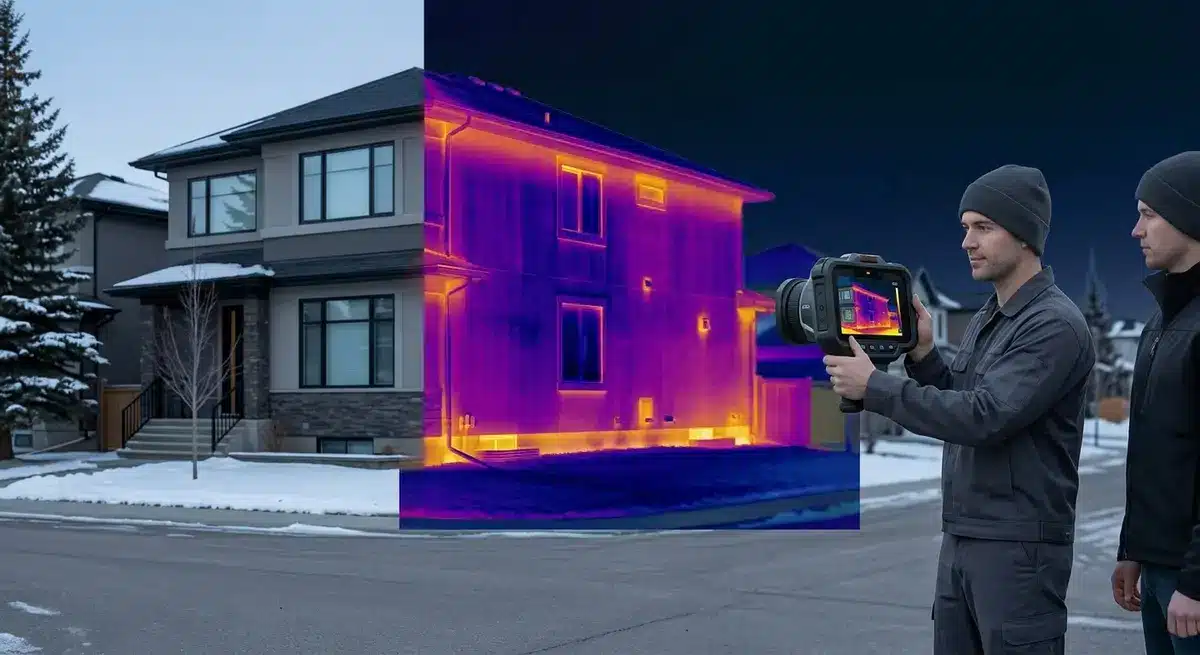
In 2026, energy efficiency is no longer a luxury—it is a financial necessity and a core component of property valuation. Alberta’s extreme climate demands robust building envelopes. Furthermore, highly efficient properties often qualify for specialized, advantageous financing programs that reward reduced carbon footprints and sustainable building practices.
Marcus Thorne, an Alberta-based Energy Auditor, states: “A home’s energy performance dictates its operational affordability. Upgrading a poorly insulated 1980s build to modern standards can cost upwards of $40,000. Buyers must ask about R-values and air tightness before making an offer.”
During your visit, ask specifically about the home’s insulation levels in the attic and exterior walls. Inquire if the home has undergone a recent EnerGuide evaluation. According to Natural Resources Canada, homes with an EnerGuide rating of zero (Net Zero) or those featuring advanced heat pump technology can yield up to 40% savings on annual utility costs compared to standard builds. Ask about the presence of smart home climate controls, heat recovery ventilators (HRVs), and the age of the weatherstripping. These elements not only ensure comfort during minus-30-degree winters but also protect the property’s long-term market competitiveness.
Conclusion
Visiting homes for sale in Alberta requires a strategic, inquisitive approach. By looking past the staging furniture and asking hard-hitting questions about structural integrity, financial obligations, unpermitted history, and energy efficiency, you protect yourself from catastrophic post-purchase expenses. The 2026 real estate market rewards buyers who conduct rigorous due diligence and demand documented proof of a property’s condition and compliance. Remember, the questions you fail to ask during the viewing are often the ones that cost you the most after closing. If you need expert guidance navigating the complexities of the Alberta housing market, contact our team today to ensure your next property investment is secure, compliant, and financially sound.


