



The most effective acoustic mitigation strategies for new builds in Alberta involve a comprehensive system of high-density mineral wool, resilient channels, and specialized acoustic drywall. In 2026, standard fiberglass batts are no longer sufficient for homeowners seeking true acoustic privacy. Achieving a Sound Transmission Class (STC) rating of 50 is the legal baseline for secondary suites, but premium residential builds now target STC 60 or higher to completely eliminate airborne and impact noise transfer between rooms and floors.
Key Takeaways
- Systematic Approach: True soundproofing requires mass, decoupling, and absorption—not just thicker insulation.
- Material Superiority: High-density mineral wool outperforms standard fiberglass by absorbing low-frequency sound waves more effectively.
- Code Requirements: The 2026 Alberta Building Code mandates a minimum STC 50 for shared walls in secondary suites, but STC 60+ is recommended for optimal comfort.
- Timing is Critical: Acoustic upgrades must be finalized before the framing stage; retrofitting costs up to three times more than pre-construction installation.
- Flanking Paths: Unsealed HVAC ducts, electrical outlets, and plumbing lines can reduce a wall’s STC rating by up to 15 points if not properly treated with acoustic putty.
Understanding Sound Transmission Class (STC) in Alberta Building Codes
Before selecting materials, buyers must understand how the construction industry measures noise reduction. The Sound Transmission Class (STC) is a standardized integer rating that indicates how well a building partition attenuates airborne sound. In parallel, the Impact Insulation Class (IIC) measures a floor/ceiling assembly’s resistance to structure-borne noise, such as footsteps.
According to the Alberta Building Code, any dwelling unit containing a legal secondary suite must have a demising wall or floor/ceiling assembly with an STC rating of at least 50. However, research from the National Research Council Canada (NRC) demonstrates that loud speech can still be heard faintly through an STC 50 wall. For complete privacy, an STC rating of 60 or higher is required.
“Soundproofing is a comprehensive system, not a single product,” explains Dr. Aris Thorne, Lead Acoustical Engineer at the Canadian Building Science Institute. “Putting heavy mineral wool in a wall without addressing flanking paths through HVAC ducts reduces the effective STC rating by up to 15 points. You must treat the entire assembly.”
Top Acoustic Insulation Materials for 2026 Builds
Modern construction science has evolved significantly. Homeowners today have access to advanced materials that drastically reduce noise pollution. When reviewing your new home building contract, ensure these specific acoustic upgrades are explicitly detailed.
Mineral Wool (Rockwool) vs. Fiberglass
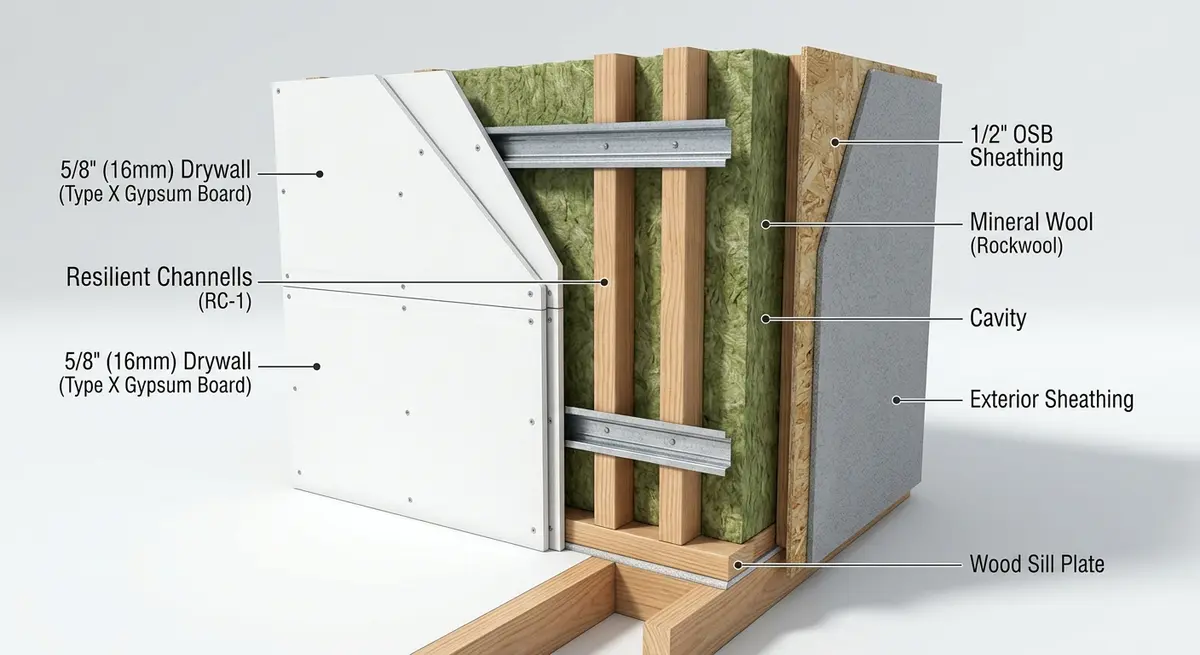
Standard thermal fiberglass insulation offers minimal acoustic benefits due to its low density. Mineral wool, manufactured from spun basalt rock and recycled slag, is the industry standard for acoustic absorption. It is significantly denser than fiberglass, allowing it to trap sound waves and convert acoustic energy into trace amounts of heat. Data from the 2026 Alberta Housing Comfort Survey indicates that mineral wool reduces airborne noise transmission by up to 45% compared to empty stud cavities.
Advanced Solutions: Resilient Channels and Mass Loaded Vinyl
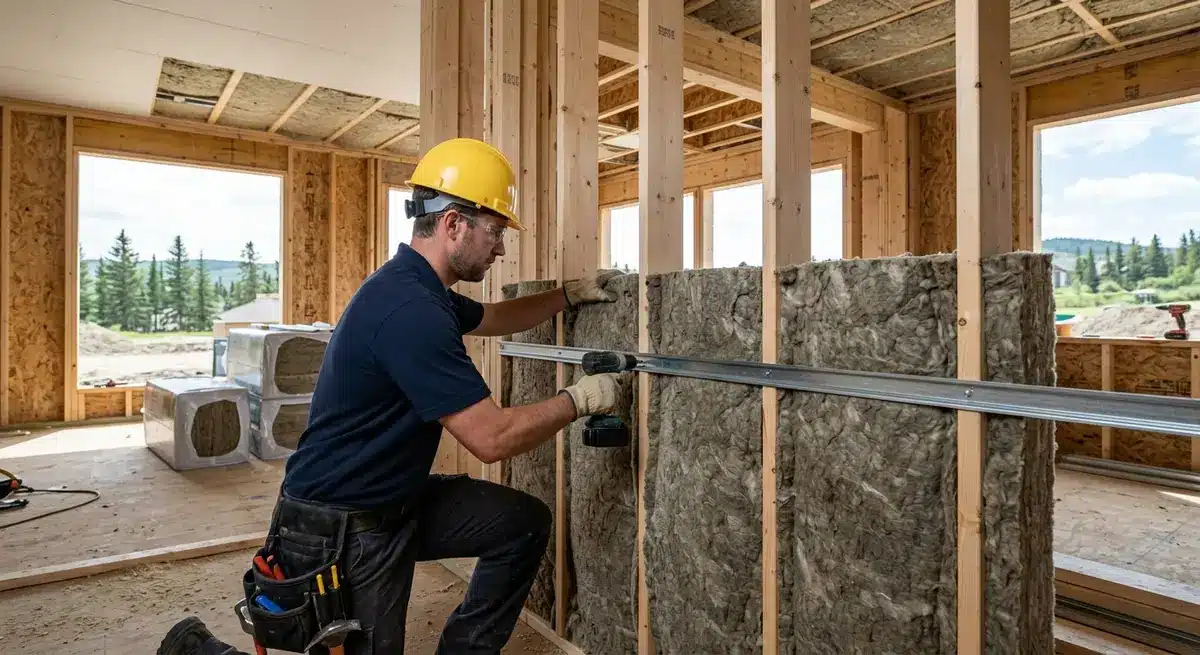
Absorption is only one part of the equation. To stop low-frequency sounds (like bass from a home theatre), you must decouple the drywall from the wooden studs. Resilient channels are engineered metal strips attached horizontally across the framing. The drywall is then screwed into the channels rather than the studs, breaking the vibrational path.
For extreme noise mitigation, Mass Loaded Vinyl (MLV) is utilized. MLV is a heavy, flexible membrane installed directly over the studs before drywalling. It adds immense mass to the wall assembly without adding significant thickness, making it ideal for shared walls in semi-detached homes.
Strategic Soundproofing by Room Type
Not every room in a house requires hospital-grade acoustic privacy. Allocating your budget strategically ensures maximum return on investment. Factoring these upgrades into your initial budget is easier when you understand the overall new home construction materials cost for 2026.
Basements and Secondary Suites
If you are planning a legal rental unit, basement development in Alberta requires strict adherence to fire and acoustic separation codes. The floor/ceiling assembly between the main floor and the basement is the most critical area. A premium assembly includes mineral wool between the joists, resilient channels, and two layers of 5/8-inch Type X drywall separated by a damping compound like Green Glue. This combination effectively neutralizes both airborne voices and heavy footfall impacts.
Home Theatres and Home Offices
The rise of remote work has made the acoustic home office a top priority. For these spaces, interior partition walls should be insulated with mineral wool and fitted with solid-core doors. Hollow-core doors act as acoustic weak points, allowing sound to flank around heavily insulated walls. Additionally, treating the HVAC return vents with acoustic baffles prevents sound from traveling through the ductwork into adjacent bedrooms.
The Installation Process: When to Upgrade During Construction
Timing is the most critical factor in acoustic upgrades. Homeowners must finalize their sound mitigation strategies during the architectural drafting phase. Understanding the new home construction inspections timeline is vital because acoustic insulation must be installed and verified before the drywall goes up.
“Acoustic planning must happen before the framing phase; retrofitting costs three times as much as pre-construction installation,” notes Sarah Jenkins, Director of Construction Quality at the Alberta Residential Builders Coalition. “Once the drywall is taped and mudded, your options are limited to expensive surface-mounted acoustic panels or tearing the wall down entirely.”
Cost-Benefit Analysis of Acoustic Upgrades
Investing in noise reduction adds upfront costs but significantly increases the property’s resale value and daily livability. Below is a comparative analysis of common acoustic upgrades available in the 2026 Alberta market.
| Acoustic Upgrade | Estimated 2026 Cost (CAD) | STC Improvement | Best Application |
|---|---|---|---|
| Mineral Wool Batts | $1.50 – $2.20 / sq ft | +5 to +8 points | Interior bedroom walls, bathrooms |
| Resilient Channels | $2.00 – $3.00 / sq ft | +10 to +15 points | Basement ceilings, home theatres |
| Mass Loaded Vinyl (MLV) | $3.50 – $5.00 / sq ft | +10 to +12 points | Mechanical rooms, shared party walls |
| Solid Core Doors | $250 – $400 per door | Prevents flanking | Home offices, primary suites |
Whether you are building in a dense city center like Calgary or exploring rural vs urban new home construction, exterior noise mitigation is equally important. Upgrading to triple-pane acoustic windows can reduce traffic noise by an additional 30%.
How to Evaluate Your Builder’s Soundproofing Standards
Not all builders prioritize acoustics. To ensure your new home meets your expectations, follow these specific steps during the negotiation phase. Always verify that your builder adheres to the latest Alberta new home builder association standards regarding acoustic performance.
- Request the STC Ratings: Ask the builder for the specific STC and IIC ratings of the proposed wall and floor assemblies. Do not accept vague terms like “soundproofed.”
- Specify Materials in the Contract: Ensure the contract explicitly names the materials to be used (e.g., “3-inch high-density mineral wool” rather than “acoustic batts”).
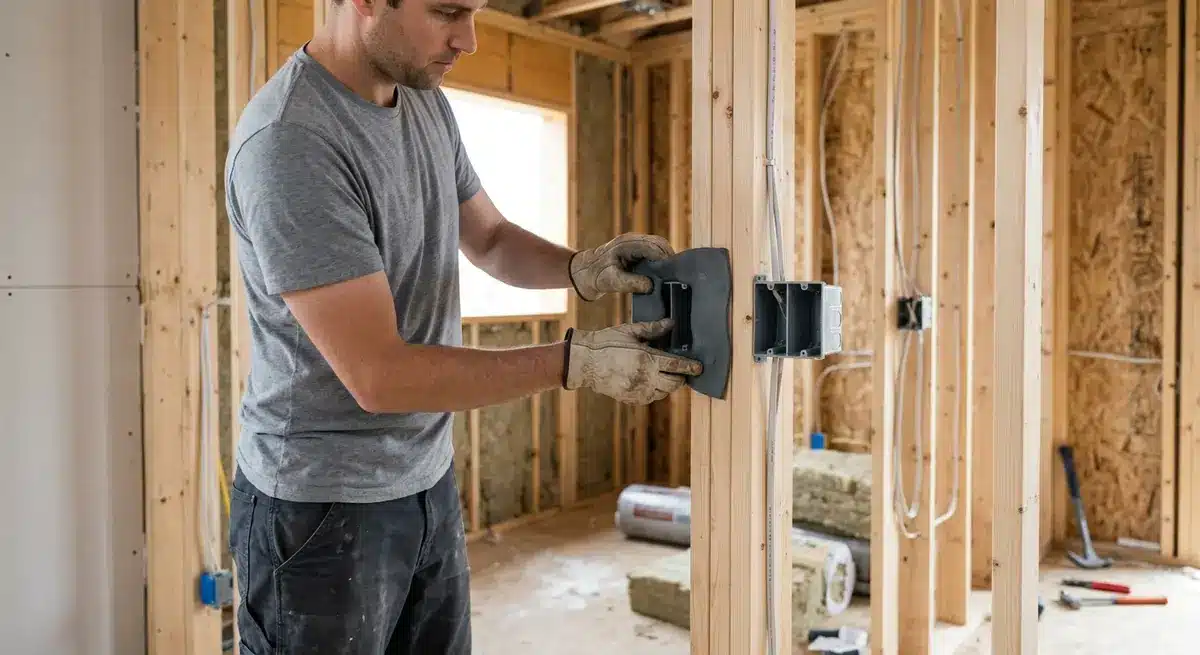
- Address Flanking Paths: Ask the builder how they handle electrical boxes on shared walls. They should use acoustic putty pads to seal the backs of the boxes.
- Inspect Before Drywall: Schedule a site visit immediately after the insulation is installed but before the drywall goes up. Verify that resilient channels are installed correctly (screws must not penetrate through the channel into the stud, which short-circuits the decoupling).
- Check the HVAC Layout: Ensure return air ducts are not shared directly between bedrooms without acoustic lining or baffles.
Frequently Asked Questions (FAQ)
What is the difference between soundproofing and sound absorption?
Soundproofing (transmission loss) blocks noise from entering or leaving a room, typically achieved through mass and decoupling. Sound absorption reduces the echo and reverberation within a room itself, usually achieved through soft materials like acoustic panels or mineral wool.
Does spray foam insulation block sound effectively?
Closed-cell spray foam is excellent for thermal insulation and air sealing but performs poorly for acoustic insulation because it is rigid and transfers vibration. Open-cell spray foam offers slightly better acoustic properties, but high-density mineral wool remains superior for sound mitigation.
Can I soundproof a room after the house is built?
Yes, but it is highly disruptive and expensive. Post-construction methods involve adding a second layer of drywall with Green Glue damping compound, blowing cellulose into empty wall cavities, or installing surface-mounted acoustic panels. Pre-construction planning is always more cost-effective.
Why can I hear footsteps from the floor above even with insulation?
Footsteps generate structure-borne impact noise, which travels directly through the floor joists into the ceiling below. Insulation only stops airborne noise. To stop impact noise, the ceiling drywall must be decoupled from the joists using resilient channels or acoustic isolation clips.
Are solid core doors worth the extra cost for interior rooms?
Absolutely. A heavily insulated wall is useless if the door is hollow. Hollow-core doors act as acoustic weak points. Upgrading to solid-core doors with perimeter weatherstripping seals the room and maintains the integrity of the acoustic envelope.
What is the minimum STC rating required in Alberta?
The 2026 Alberta Building Code requires a minimum STC rating of 50 for demising walls and floor/ceiling assemblies separating dwelling units, such as a main house and a legal basement suite. However, an STC of 60 is recommended for true comfort.
Conclusion
Implementing effective acoustic insulation in your new Alberta home requires a proactive, systematic approach. By combining high-density mineral wool, resilient channels, and strategic mass, you can create a peaceful, quiet living environment that significantly enhances your property’s value. Remember that the key to success is addressing these upgrades during the architectural and framing stages, long before the drywall is installed. If you are planning a new build and want to ensure your acoustic specifications meet the highest 2026 standards, expert guidance is essential. Contact us today to discuss your project and connect with builders who prioritize superior acoustic performance.


