



A Certificate of Occupancy in Alberta is a mandatory legal document issued by a municipal safety codes officer, confirming that a newly constructed property meets all provincial building codes and is legally safe for human habitation. Without this critical permit, buyers cannot legally move into the property, finalize their mortgage funding, or secure comprehensive home insurance. It serves as the final regulatory stamp of approval, proving that the structural integrity, fire safety systems, and essential utilities have been rigorously tested and verified.
Key Takeaways
- Legal Requirement: It is illegal to inhabit a newly built home in Alberta without a finalized occupancy permit from the local municipality.
- Financial Dependency: Over 85% of Canadian mortgage lenders require this certificate before releasing the final construction draw or closing funds.
- Inspection Prerequisites: The permit is only issued after the property passes a series of rigorous electrical, plumbing, gas, and structural inspections.
- Seasonal Exceptions: In Alberta, builders can often obtain a “Partial” or “Conditional” occupancy permit if winter weather delays final exterior grading or landscaping.
- Insurance Mandate: Homeowners cannot transition from a builder’s risk policy to standard home insurance without providing this document.
Understanding the Regulatory Framework in 2026
Navigating the regulatory landscape of residential construction requires a clear understanding of provincial and municipal safety standards. In Alberta, the issuance of occupancy permits is governed by the Safety Codes Act and aligns with the National Building Code – 2023 Alberta Edition, which remains the enforceable standard through 2026. This framework ensures that every new dwelling provides a safe environment for its occupants.
The responsibility for obtaining this certification typically falls on the builder or general contractor. However, the ultimate consequences of a delayed permit fall squarely on the buyer or investor. According to 2026 data from the Canadian Home Builders’ Association (CHBA), approximately 14% of new residential builds experience a delay in possession specifically due to minor safety code infractions discovered during the final inspection phase.
As Sarah Jenkins, Chief Safety Codes Officer at a prominent Alberta regulatory consultancy, explains: “The occupancy permit is your ultimate safeguard. It proves the structural integrity, fire safety, and essential utilities of the property have been rigorously tested. Buyers should never accept keys to a property without verifying this document is in hand.”
The Step-by-Step Final Inspection Process
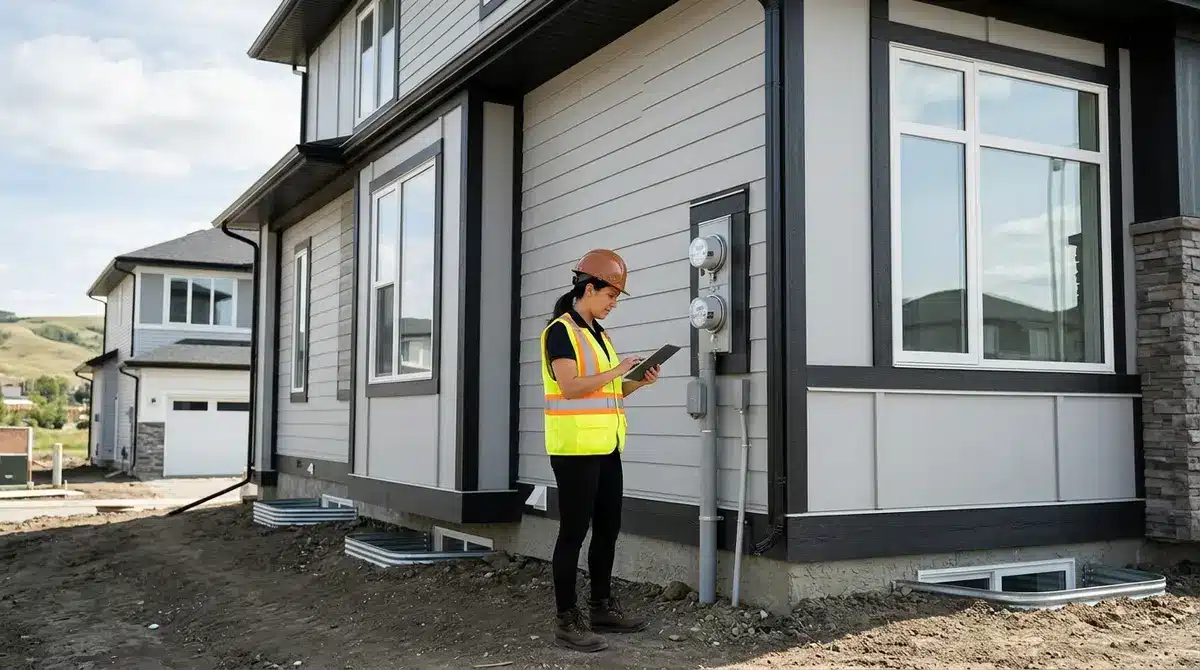
Before a municipality issues the final clearance, the property must undergo a comprehensive stage-by-stage inspection timeline. A certified Safety Codes Officer (SCO) conducts these evaluations to ensure compliance with approved blueprints and provincial regulations.
- Rough-In Inspections: Long before the drywall goes up, inspectors verify the framing, electrical wiring, plumbing pipes, and HVAC ductwork. Any deficiencies here must be corrected before insulation is installed.
- Insulation and Vapor Barrier Check: Given Alberta’s extreme climate, inspectors rigorously check the building envelope to ensure it meets the strict energy efficiency standards mandated in the current building code.
- Final Trade Inspections: Once the home is visually complete, individual inspectors return to test the operational safety of the electrical panels, gas lines, and plumbing fixtures.
- The Final Building Inspection: The last step is a comprehensive walkthrough by the building inspector. They check for functional smoke alarms, proper egress windows, handrails, and overall structural safety.
If the home passes this final evaluation, the municipality typically issues the documentation within 48 to 72 hours.
Financial and Insurance Repercussions
The implications of this certification extend far beyond basic safety; it is the linchpin of your real estate transaction. Financial institutions and insurance providers view the occupancy permit as the official transition point from a “construction site” to a “residential asset.”
From a financing perspective, lenders mitigate their risk by withholding the final mortgage advance until the property is legally habitable. If you are managing a custom build or working with a developer, failing to secure this document on time can trigger a cascade of closing costs and financing extension fees. Research from the Canadian Bankers Association indicates that over 85% of major lenders strictly enforce this requirement prior to funding.
Similarly, securing new home construction insurance transitions into standard homeowner’s coverage only when the property is certified complete. The Insurance Bureau of Canada notes that inhabiting a home without municipal clearance can void existing builder’s risk policies, leaving the homeowner entirely liable for fire, flood, or liability claims.
Document Comparison: Occupancy vs. Completion
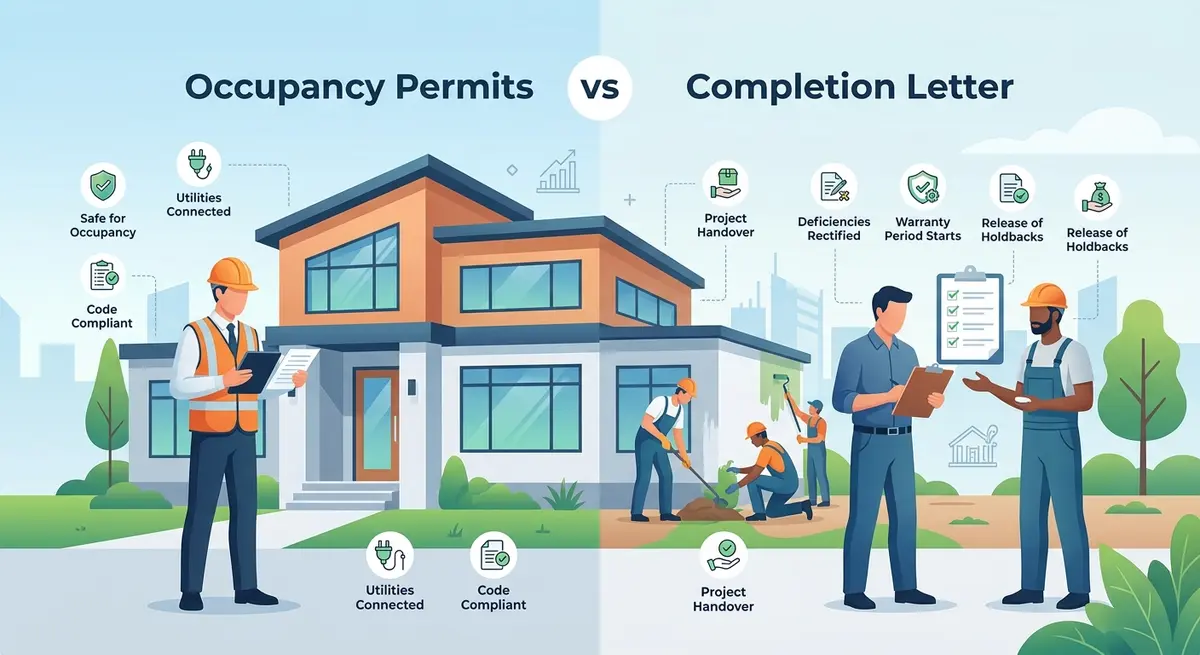
A common point of confusion for buyers is the difference between various end-of-build documents. Understanding these distinctions is crucial for protecting your investment.
| Document Type | Definition | Legal Status |
|---|---|---|
| Full Certificate of Occupancy | Confirms 100% compliance with all safety codes and municipal bylaws. | Fully legal to inhabit; required for mortgage closing. |
| Partial/Conditional Occupancy | Allows move-in while minor, non-safety issues (like exterior stucco or grading) are completed. | Legal to inhabit, but builder must finish conditions by a set deadline. |
| Letter of Substantial Completion | A contractual document between builder and buyer stating the home is ready for use. | Not a municipal safety document; does not grant legal right to occupy. |
Overcoming Common Roadblocks and Deficiencies
Even with experienced builders, the path to final certification isn’t always smooth. Understanding common construction delays can help you set realistic expectations for your possession date.
The most frequent roadblocks involve minor safety infractions. A missing handrail, an improperly wired GFCI outlet, or inadequate ventilation in a utility room can result in a failed inspection. When this happens, the SCO issues a deficiency report. The builder must rectify the specific issues and schedule a re-inspection, which can delay possession by several days to a few weeks, depending on municipal backlogs.
David Chen, a senior project manager in Edmonton, notes: “In 2026, we are seeing stricter enforcement on energy efficiency metrics. If the blower door test fails or the HVAC balancing is off, the municipality will withhold the permit until the environmental standards are met.”
Navigating Seasonal Challenges in Alberta
Alberta’s harsh climate introduces unique challenges to the certification process. During the winter months, frozen ground makes it impossible to complete final exterior grading, pour driveways, or finish landscaping. To prevent the entire housing market from stalling between November and April, municipalities offer seasonal workarounds.
Buyers can often secure a Conditional Occupancy Permit. This allows you to move in safely while acknowledging that exterior work will be completed in the spring. However, managing winter construction challenges requires careful coordination with your lender, as some financial institutions may hold back a portion of the mortgage funds (often $5,000 to $15,000) in escrow until the seasonal deficiencies are officially cleared by the municipality.
Municipal Nuances: Calgary, Edmonton, and Beyond
While the provincial building code provides a unified standard, the administrative process varies by municipality. The City of Calgary Building Services and the City of Edmonton have digitized their permit tracking systems, allowing builders to schedule inspections and receive digital certificates rapidly.
Conversely, navigating rural construction requirements can be more complex. In counties and municipal districts outside major urban centers, inspections may be contracted out to third-party agencies like Superior Safety Codes. This can lead to longer wait times for inspection appointments, making proactive scheduling by your builder absolutely essential.
The Final Walkthrough: Your Last Line of Defense
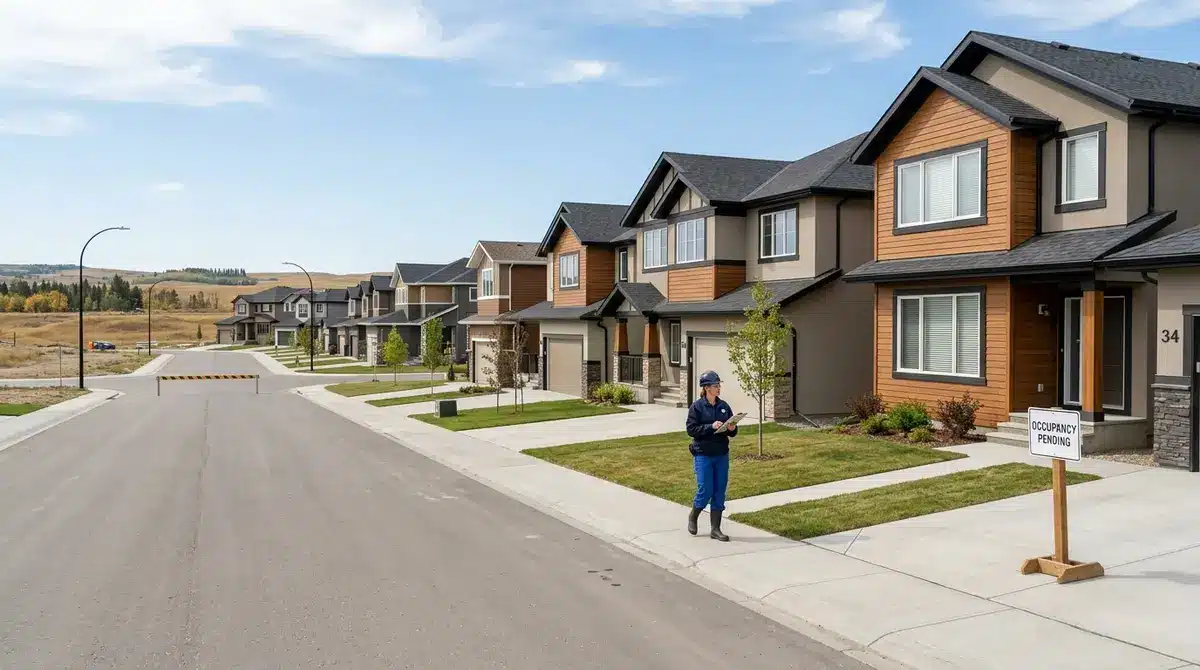
Securing municipal clearance does not mean the home is flawless; it simply means it is safe and meets minimum code requirements. Cosmetic issues, such as scratched flooring, paint touch-ups, or misaligned cabinet doors, are not the concern of the municipal safety inspector.
This is why the final pre-possession walkthrough is critical. During this orientation, you will create a comprehensive deficiency list with your builder. Ensure that you physically see the municipal occupancy document during this meeting. Never sign the final acceptance papers or hand over the closing draft without verifying that the legal right to occupy has been granted by the city or county.
Frequently Asked Questions (FAQ)
Can I move my furniture in before the occupancy permit is issued?
No. Legally, you cannot move personal belongings into the home or inhabit the space until the municipality issues the permit. Doing so violates safety codes and can void the builder’s insurance policy.
Who pays for the final occupancy inspection in Alberta?
The cost of all municipal building permits and associated inspections is typically rolled into the overall purchase price of the home and is managed by the builder or general contractor.
What happens if my builder goes bankrupt before getting the permit?
If a builder becomes insolvent, the buyer must work with their new home warranty provider and potentially hire a new contractor to finish any outstanding safety requirements to pass the final municipal inspection.
Does a partial occupancy permit affect my mortgage?
It can. While most lenders will advance funds on a partial permit, they usually require a “seasonal holdback”—retaining a specific amount of money in trust until the final exterior work is completed and the full permit is issued.
How long does it take to get the certificate after the final inspection?
In major Alberta cities like Calgary and Edmonton, if the property passes the final inspection without deficiencies, the digital certificate is typically issued within 48 to 72 business hours.
Is an occupancy permit the same as a new home warranty?
No. The permit is a municipal document verifying safety and code compliance. The new home warranty is a mandatory provincial insurance program that protects buyers against structural defects and poor workmanship for up to 10 years.
Conclusion
Securing your final municipal clearance is the most critical milestone in the new home construction journey. It transforms a construction site into a legally habitable, insurable, and financeable asset. By understanding the 2026 regulatory standards, anticipating seasonal delays, and maintaining open communication with your builder, you can ensure a seamless transition on possession day. Always verify your documentation and never compromise on the legal safety of your new investment.
If you are navigating the complexities of a new build and need expert guidance on protecting your investment, we are here to help. Contact us today to speak with our team of Alberta real estate professionals.


