



Successfully navigating the complexities of building a property requires a strategic approach to product sourcing. The definitive method for selecting materials in modern new home construction involves balancing upfront capital expenditures with long-term climate resilience, energy efficiency, and lifecycle durability. By prioritizing high-performance building envelopes and durable interior finishes, homeowners and investors can significantly reduce maintenance costs while maximizing the property’s overall market value.
Key Takeaways
- Prioritize the Envelope: Investing heavily in structural framing, insulation, and weather-resistant barriers yields the highest long-term return on investment.
- Lifecycle Over Upfront Cost: Evaluating the total cost of ownership over 15 to 30 years prevents expensive premature replacements.
- Climate-Specific Choices: Materials must be selected based on local weather extremes, particularly focusing on frost protection and wind resistance.
- Acoustic Management: High Sound Transmission Class (STC) ratings are now a baseline expectation for modern residential builds.
- Supply Chain Stability: Domestically sourced engineered materials offer better price predictability and dimensional stability in 2026.
The 2026 Landscape of Building Materials
The construction industry has evolved significantly, shifting away from purely aesthetic decisions toward performance-driven architecture. In 2026, the focus is squarely on sustainability, energy retention, and mitigating the impacts of severe weather. Understanding the construction materials cost forecast is essential for setting a realistic budget before breaking ground.
According to recent data from Statistics Canada, core building material costs have stabilized at a 3.2% annual inflation rate, allowing builders and buyers to forecast expenses with greater accuracy than in previous volatile years. This stabilization means buyers can confidently allocate funds toward premium, high-performance components rather than holding massive contingency reserves.
As David Chen, Supply Chain Analyst at the Construction Materials Institute, explains: “The 2026 supply chain heavily favors domestically sourced engineered timber and advanced composites. These materials not only bypass international shipping bottlenecks but also offer superior dimensional stability compared to traditional raw lumber.”
Structural Foundations and Framing
The skeleton of your home dictates its structural integrity, energy efficiency, and resistance to environmental stressors. Choosing the right foundational and framing materials is the most critical step in the entire building process.
Framing: Timber vs. Engineered Wood vs. Steel
While traditional dimensional lumber remains popular, engineered wood products—such as Oriented Strand Board (OSB) and Cross-Laminated Timber (CLT)—now account for 42% of all structural framing in new residential builds, according to the Canadian Home Builders’ Association. Engineered wood resists warping and bowing, which is crucial for maintaining airtight seals around windows and doors.
For properties in regions with deep freeze-thaw cycles, integrating Insulated Concrete Forms (ICF) into the foundation is highly recommended. Understanding local frost protection standards ensures your foundation won’t crack under the pressure of expanding frozen soil.
Advanced Insulation and Vapor Barriers
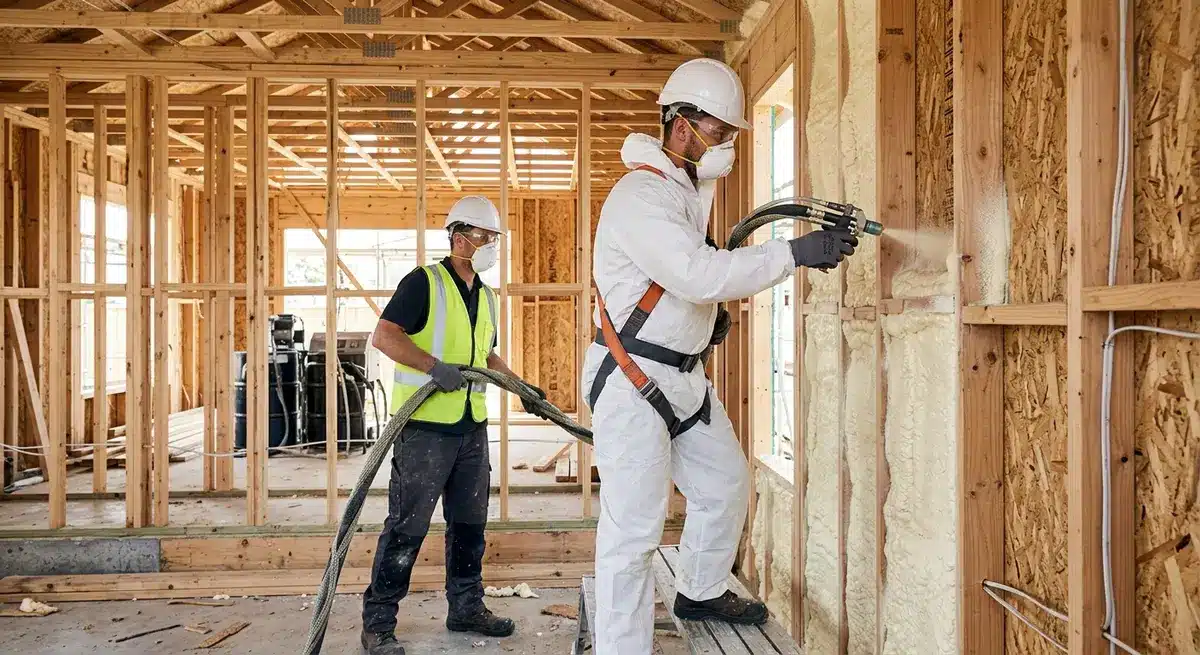
Insulation is measured by its R-value, which indicates its resistance to heat flow. To combat thermal bridging—where heat escapes through the structural framing—builders are increasingly utilizing continuous exterior insulation paired with closed-cell polyurethane spray foam in the wall cavities.
Research from Natural Resources Canada demonstrates that utilizing closed-cell spray foam in conjunction with a high-quality vapor barrier can result in a 35% reduction in annual heating costs. This is particularly vital when managing winter construction challenges and ensuring the home performs efficiently year-round.
Exterior Cladding and Roofing: The First Line of Defense
The exterior of your home must withstand UV radiation, driving rain, hail, and extreme temperature fluctuations. Selecting durable exterior finishes is not just an aesthetic choice; it is a critical defensive strategy.
High-Performance Roofing Systems
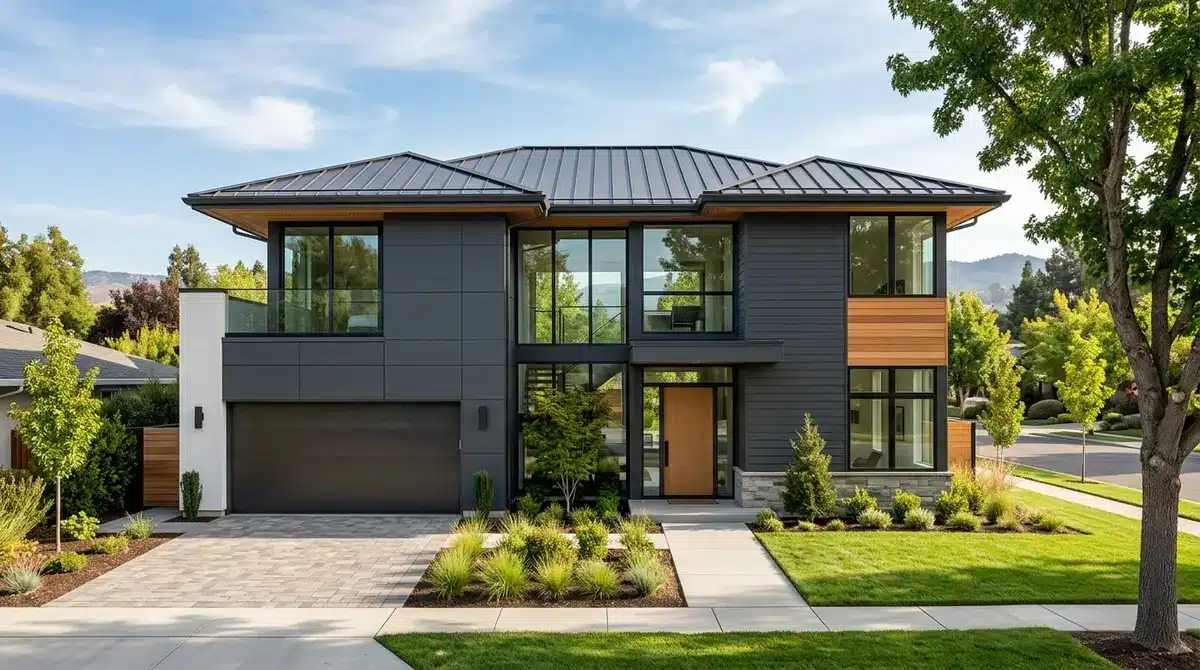
The roof is arguably the most vulnerable component of the building envelope. Approximately 25% of a home’s heat loss occurs through poorly insulated and ventilated roofing systems. While asphalt shingles remain the budget-friendly standard, metal roofing and composite slate are dominating the premium market.
A standing-seam metal roof boasts a lifespan of 50+ years, compared to the 15 to 20 years typically expected from standard architectural asphalt shingles. Furthermore, metal roofs reflect solar radiant heat, which can reduce summer cooling costs by up to 15%.
Siding Solutions for Extreme Weather
Vinyl siding is cost-effective but can become brittle and crack in sub-zero temperatures. In contrast, fiber cement cladding has emerged as the gold standard for durability. It is impervious to wood-boring insects, resists rot, and can withstand wind gusts of up to 130 mph.
Marcus Thorne, Senior Architect at BuildTech Canada, notes: “Investors often underestimate the long-term maintenance savings of fiber cement siding. The upfront premium pays for itself within the first decade through avoided repairs and lower insurance premiums.” Making the right choice here also positively influences the environmental impact of your build by reducing the frequency of material replacement.
Interior Finishes: Merging Durability with Design
Once the exterior envelope is secure, the focus shifts inward. Interior materials must endure daily wear and tear while providing acoustic comfort and visual appeal.
Flooring That Withstands Heavy Traffic
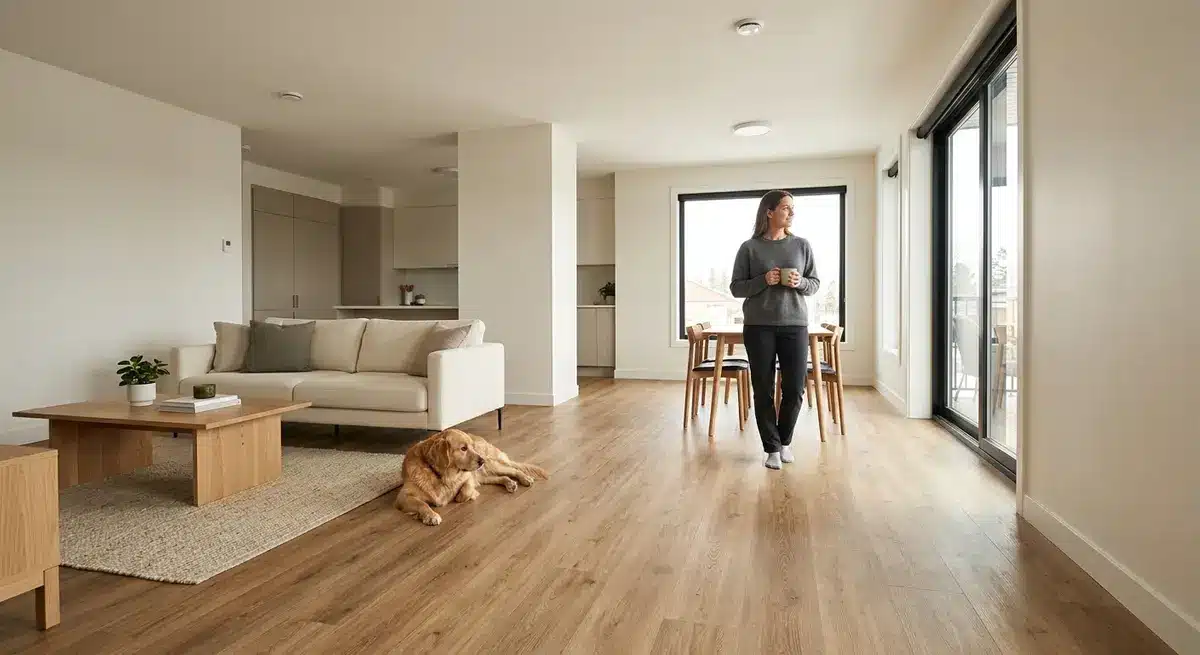
The flooring industry has seen a massive shift toward resilient materials. Luxury Vinyl Plank (LVP) currently holds a staggering 68% market share in new residential flooring. LVP is 100% waterproof, highly scratch-resistant, and can convincingly mimic the texture and grain of natural hardwood.
While site-finished hardwood remains a luxury staple, it requires strict humidity control to prevent gapping and cupping. For high-traffic areas, basements, and rental suites, LVP or engineered hardwood are far superior choices. If you are planning a lower-level suite, proper flooring selection is a key part of basement development planning.
Drywall and Acoustic Management
Acoustic privacy is a major factor in modern home satisfaction. Standard half-inch drywall offers minimal soundproofing. Upgrading to 5/8-inch Type X drywall, combined with resilient channel clips and acoustic mineral wool insulation, drastically reduces noise transfer between rooms.
Elena Rostova, Principal Designer at Urban Acoustics Inc., states: “Acoustic comfort is no longer a luxury in multi-family or high-density builds; it is a baseline expectation that directly impacts tenant retention and buyer satisfaction.” To achieve optimal privacy, aim for a Sound Transmission Class (STC) rating of 50 or higher between bedrooms and living spaces. You can explore more about these upgrades in our guide to sound insulation options.
Step-by-Step Process for Choosing Your Finishes
Selecting materials can be overwhelming. Follow this systematic approach to ensure you make logical, financially sound decisions rather than purely emotional ones.
- Assess the Micro-Climate: Evaluate your specific lot. Does it face heavy prevailing winds? Is it exposed to intense afternoon sun? Choose exterior materials that counter these specific elements.
- Establish a Hard Budget: Separate your budget into “structural/envelope” and “cosmetic finishes.” Never sacrifice envelope quality for high-end cosmetic finishes.
- Prioritize the Unchangeable: Spend money on things that are difficult or impossible to change later, such as foundation waterproofing, framing quality, and in-wall plumbing.
- Evaluate Lifecycle Costs: Calculate the cost of a material over 20 years, factoring in maintenance, painting, and replacement.
- Consult the Builder’s Standard Specs: Review what is included in the base price and strategically select new home upgrades that offer the highest return on investment.
Lifecycle Cost Analysis: Material Comparison
To illustrate the importance of lifecycle evaluation, consider the following comparison of common building materials based on 2026 market averages.
| Material Category | Standard Option | Premium Option | Lifespan Difference | Long-Term ROI |
|---|---|---|---|---|
| Roofing | Asphalt Shingles | Standing Seam Metal | 15 yrs vs. 50+ yrs | High (Energy savings & zero replacement) |
| Exterior Cladding | Vinyl Siding | Fiber Cement | 20 yrs vs. 40+ yrs | High (Weather resistance & appraisal value) |
| Flooring | Carpet / Laminate | Luxury Vinyl Plank (LVP) | 7 yrs vs. 25+ yrs | Medium (Durability & tenant appeal) |
| Windows | Double-Pane Argon | Triple-Pane Low-E | Equal lifespan | High (22% ROI over 10 years via energy savings) |
Maximizing Long-Term Asset Value
The materials you select today directly influence the future appraisal value of the property. According to the Appraisal Institute of Canada, homes featuring premium exterior cladding, high-efficiency HVAC systems, and upgraded insulation command a 12-18% increase in overall property value compared to standard code-minimum builds.
Dr. Sarah Jenkins, Building Science Director at the University of Calgary, summarizes this perfectly: “Choosing the right building envelope isn’t just about immediate code compliance; it’s about future-proofing the asset against increasingly volatile weather patterns and rising energy costs.”
By viewing your material selections through the lens of long-term asset management rather than short-term cost savings, you ensure that your new build remains competitive, comfortable, and structurally sound for decades to come.
Frequently Asked Questions (FAQ)
What is the most cost-effective exterior cladding for a new home?
While vinyl siding has the lowest upfront cost, fiber cement is considered the most cost-effective over a 20-year period. Its resistance to hail, wind, and rot significantly reduces maintenance and replacement expenses.
Is upgrading to triple-pane windows worth the investment?
Yes, particularly in climates with severe winters. Triple-pane windows offer superior thermal resistance, reducing drafts and cutting heating costs, which typically yields a positive return on investment within 8 to 10 years.
How do I choose the right insulation for my new build?
Focus on achieving a high R-value and eliminating thermal bridging. A combination of continuous exterior rigid foam and interior closed-cell spray foam provides the best defense against heat loss and moisture intrusion.
Why is Luxury Vinyl Plank (LVP) so popular in new construction?
LVP is 100% waterproof, highly durable, and cost-effective to install. It provides the aesthetic appeal of natural wood without the susceptibility to moisture damage, making it ideal for high-traffic areas and basements.
Can I change my material selections after construction begins?
Changing materials after the framing stage often incurs hefty change-order fees and delays the construction timeline. It is crucial to finalize all structural and envelope materials before the foundation is poured.
What does STC mean in drywall selection?
STC stands for Sound Transmission Class, a rating system that measures how well a material blocks airborne sound. Higher STC ratings indicate better soundproofing, which is essential for bedrooms, home offices, and multi-unit walls.
Conclusion
Selecting the right materials for your new home construction is a delicate balancing act between upfront costs, aesthetic desires, and long-term performance. By prioritizing the building envelope—specifically advanced framing, superior insulation, and weather-resistant roofing and cladding—you protect your investment from the elements and volatile energy prices. Interior choices like LVP flooring and acoustic drywall further enhance the daily living experience and long-term durability of the property. If you are preparing to build and need expert guidance on navigating these crucial decisions, contact our team today to ensure your next project is built to last.


