



Resolving construction flaws in a newly built Alberta property requires a systematic approach involving direct builder communication, mandatory provincial warranty claims, and, if necessary, third-party dispute resolution. Under the province’s regulatory framework, homeowners are legally entitled to specific coverage periods for materials, delivery systems, and structural integrity, ensuring that valid deficiencies are rectified without undue financial burden on the buyer. Navigating this process efficiently depends on meticulous documentation and a clear understanding of your statutory rights.
Key Takeaways
- Statutory Protection: Alberta mandates a 1-2-5-10 year warranty structure covering everything from cosmetic finishes to major structural components.
- Early Documentation: Photographing and logging issues immediately is the most critical step in validating a claim.
- Builder First: Always provide the builder with a formal, written opportunity to correct the issue before escalating to the warranty provider.
- Conciliation Services: If disputes arise, warranty providers offer mediation processes that resolve the vast majority of conflicts without litigation.
- Strict Deadlines: Missing a warranty expiry date by even one day can result in a denied claim, making timeline management essential.
Understanding Alberta’s Statutory Warranty Framework
Before initiating any formal complaint, homeowners must understand the legal safety net designed to protect their investment. According to the Alberta’s New Home Buyer Protection Act, every new residential build must be covered by a mandatory warranty policy. As of the 2026 building code updates, this framework remains the cornerstone of consumer protection in the province’s real estate sector.
The system operates on a strict 1-2-5-10 timeline:
- 1 Year: Covers materials and labor for cosmetic and general finishes (e.g., flooring, baseboards, paint).
- 2 Years: Covers delivery and distribution systems (plumbing, electrical, heating, and ventilation).
- 5 Years: Covers the building envelope, protecting against water penetration and exterior shell failures.
- 10 Years: Covers major structural components, including the foundation and load-bearing framing.
Research from the provincial registry indicates that coverage limits are capped at $130,000 for a single-family home and up to $3.3 million for multi-family complexes. Understanding these parameters is vital when reviewing your purchase agreement clauses to ensure you know exactly what financial protections are in place.
Identifying and Documenting Construction Flaws
Not every crack or squeak qualifies as a legitimate building failure. Homes are dynamic structures that settle and adapt to Alberta’s extreme climate fluctuations. Distinguishing between normal material shrinkage and a genuine defect is the first hurdle homeowners face.
Defects generally fall into two categories: patent and latent. Patent defects are obvious flaws visible to the naked eye, such as a cracked tile or a misaligned door. Conversely, latent defects are hidden issues that may not manifest until months or years after possession, such as a slow plumbing leak behind drywall or inadequate insulation.
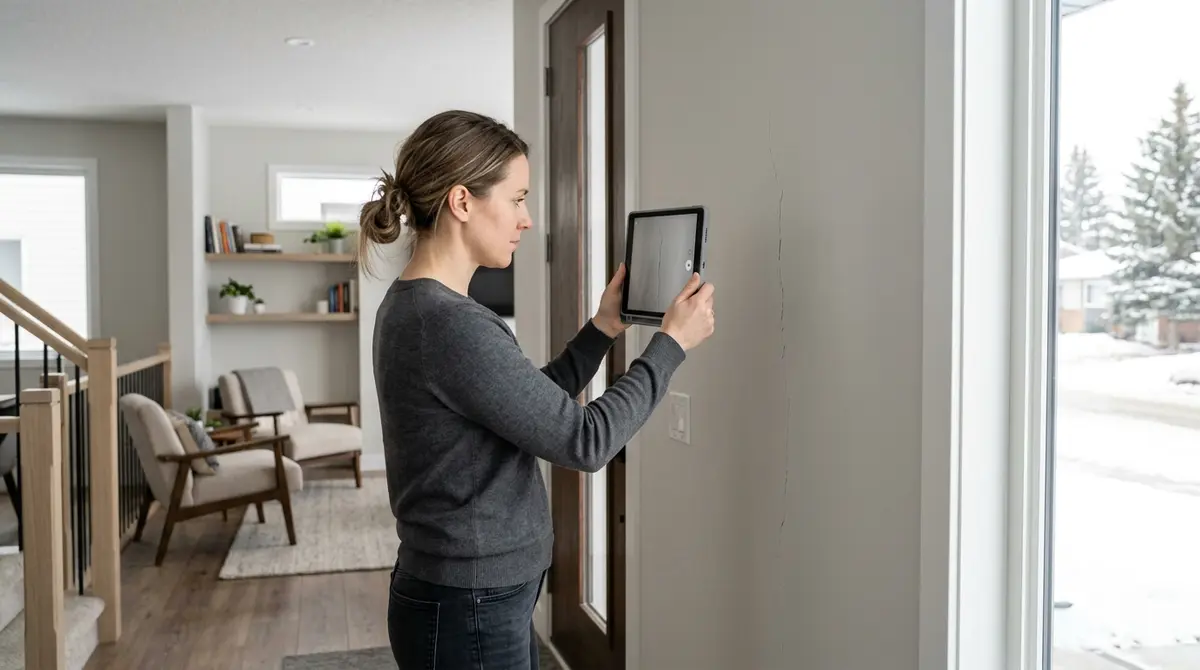
“Documenting a deficiency the moment it appears is the single most critical step a homeowner can take,” explains Sarah Jenkins, Senior Adjudicator at the Alberta Construction Dispute Board. “A timestamped photograph and a written log establish a factual timeline that builders and warranty providers cannot easily dismiss.”
The Step-by-Step Defect Resolution Process
When you discover an issue, following a structured, emotionless process yields the best results. Industry data shows that nearly 20% of new builds experience minor cosmetic defects within the first year, making this a common procedure rather than an exceptional crisis.
- Immediate Documentation: Take clear, well-lit photos and videos of the issue. Place a ruler or coin in the frame for scale if documenting cracks or gaps.
- Review the Performance Guide: Consult the Residential Construction Performance Guide to verify if the issue exceeds allowable tolerances. If a floor squeak is within acceptable decibel limits, it may not be an actionable claim.
- Formal Builder Notification: Contact your builder in writing. Avoid phone calls unless followed up by an email summarizing the conversation. Provide a clear description of the problem and attach your documentation.
- Allow for Assessment and Repair: Builders typically have a 30-day timeline to respond to a standard warranty claim and schedule an inspection.
- Escalate to Warranty Provider: If the builder is unresponsive, denies the claim unfairly, or performs substandard repairs, file a formal claim with your third-party warranty provider before the coverage period expires.
Familiarizing yourself with this workflow during your new home orientation meeting can save significant stress down the road.
Categorizing Common Building Deficiencies
To effectively communicate with contractors and adjudicators, it helps to categorize the issue accurately. Below is a breakdown of how different flaws are classified under Alberta’s system.
| Defect Category | Common Examples | Coverage Period | Resolution Complexity |
|---|---|---|---|
| Cosmetic & Finish | Nail pops, peeling paint, scratched flooring | 1 Year | Low – Usually fixed in a single visit |
| Mechanical Systems | Faulty HVAC, leaking pipes, electrical shorts | 2 Years | Medium – Requires specialized trades |
| Building Envelope | Window leaks, roof flashing failures, siding gaps | 5 Years | High – May require extensive exterior work |
| Structural | Foundation shifting, sagging roof trusses | 10 Years | Severe – Requires engineering assessments |
Navigating Builder Disputes and Warranty Claims
Disagreements between buyers and builders are not uncommon. A builder might argue that a cracked driveway is due to the homeowner using harsh de-icing salts, while the homeowner insists the concrete mix was flawed.
“Builders want to resolve issues quickly to maintain their standing, but ambiguous communication often stalls the process,” notes David Chen, Principal Architect at Western Build Standards. By maintaining a professional, objective tone and relying on the performance guidelines set by the Canadian Home Builders’ Association, you remove emotion from the equation.
If you find yourself at an impasse, you have a 45-day window to escalate unresolved claims to your warranty provider after the builder’s initial response period lapses. This is why vetting your builder’s reputation before signing a contract is so crucial; reputable builders rarely let issues reach the escalation phase.

The Role of Third-Party Conciliation and Mediation
When a claim is escalated, the warranty provider steps in as an impartial third party. They will typically initiate a conciliation process. Conciliation involves a site visit by an independent claims assessor who evaluates the defect against provincial building codes and warranty standards.
“Conciliation is designed to be a collaborative fact-finding mission, not an adversarial courtroom battle,” states Marcus Thorne, Director of Warranty Mediation Services. “Our goal is to determine the root cause of the failure and assign responsibility based purely on the technical evidence.”
Statistics show that the conciliation process takes an average of 60 days from initiation to a final ruling. Impressively, 95% of disputes are resolved at this stage without the need for formal litigation. If the assessor rules in the homeowner’s favor, the builder is legally compelled to execute the repairs. If the builder defaults or goes bankrupt, the warranty provider hires a different contractor to complete the work, ensuring the homeowner is not left stranded.
Legal Recourse and Advanced Dispute Resolution
In the rare 5% of cases where conciliation fails or the homeowner disputes the warranty provider’s ruling, legal recourse becomes the final option. This typically involves binding arbitration or civil litigation.
Before proceeding to court, homeowners should consult the Canadian Legal Information Institute databases to review precedents regarding construction disputes in Alberta. Hiring a lawyer specializing in construction law is highly recommended at this stage. Be aware that litigation is expensive and time-consuming; it should only be pursued for severe structural or building envelope failures where the financial damages far exceed legal fees.
Interestingly, industry data from 2026 reveals a 15% increase in warranty claims during extreme winter months, as severe cold exposes flaws in insulation and heating systems. Understanding the construction phases before getting your keys can help you anticipate these seasonal vulnerabilities.

Proactive Measures: Preventing Issues Before Possession
The most effective way to handle a defect is to catch it before you officially take ownership of the property. The pre-possession phase is your golden opportunity to scrutinize the build.
“A thorough pre-possession inspection catches over 70% of potential warranty claims before the keys ever change hands,” advises Elena Rostova, a Certified Alberta Home Inspector. Hiring an independent inspector to review the property during the framing stage and again before final handover is a relatively small investment that pays massive dividends.
During your final pre-possession walkthrough, test every appliance, run every faucet, flush every toilet, and open every window. Document any deficiencies on the Certificate of Possession (COP). Builders are highly motivated to fix these items quickly so they can release the final draw of construction funds. Furthermore, understanding the construction inspection timelines ensures you never miss a critical evaluation window.
Frequently Asked Questions (FAQ)
What happens if my builder ignores my warranty claim?
If your builder fails to respond within a reasonable timeframe (typically 30 days), you should immediately escalate the claim to your third-party warranty provider. The provider will step in, assess the claim, and can compel the builder to act or hire an alternate contractor to complete the repairs.
Are driveway cracks covered under the Alberta new home warranty?
Driveway cracks are generally considered cosmetic and are only covered in the first year if they exceed specific width tolerances outlined in the Residential Construction Performance Guide. Hairline cracks caused by normal concrete curing or seasonal freezing are usually not covered.
Can I hire my own contractor to fix a defect and bill the builder?
No, you should never hire an outside contractor to repair a defect without written authorization from your builder or warranty provider. Doing so can void your warranty for that specific component, leaving you entirely responsible for the costs.
How long do I have to report a structural defect?
Under Alberta law, major structural defects are covered for 10 years from the date of possession. However, you must report the defect to the warranty provider as soon as you discover it, as delaying the report can exacerbate the damage and jeopardize your claim.
What is the difference between a building envelope and a structural defect?
The building envelope refers to the components that separate the indoors from the outdoors (roof, exterior walls, windows) and is covered for 5 years. Structural defects refer to the load-bearing elements of the home (foundation, framing) and are covered for 10 years.
Does the warranty transfer if I sell the house?
Yes, the statutory warranty is attached to the property, not the owner. If you sell the home within the 10-year coverage period, the remaining balance of the warranty automatically transfers to the new buyer.
Conclusion
Addressing construction flaws in a new property doesn’t have to be a nightmare. By understanding Alberta’s statutory warranty framework, meticulously documenting issues, and communicating professionally with your builder, you can navigate the resolution process with confidence. Remember that the system is designed to protect your investment, and third-party conciliation is highly effective at resolving disputes without the need for costly litigation. If you are currently facing challenges with a new build or want to ensure your next investment is fully protected, contact us today to speak with our real estate experts.


