



When deciding whether to build a new home in an established versus a new neighborhood in Alberta, buyers must weigh immediate lifestyle amenities against overall construction costs. Infill homes in mature communities offer towering tree canopies, central locations, and robust public transit, but they come with higher land acquisition and demolition expenses. Conversely, brand-new subdivisions provide master-planned infrastructure, predictable construction timelines, and lower initial lot costs, though they often lack immediate access to established commercial hubs and rapid transit networks. The right choice depends entirely on your 2026 budget, timeline, and long-term real estate investment strategy.
Key Takeaways
- Cost Dynamics: Infill construction in mature Alberta communities typically commands a 15% to 25% premium due to land scarcity, demolition requirements, and complex utility upgrades.
- Infrastructure Readiness: Established neighborhoods offer immediate access to schools, transit, and emergency services, whereas new developments may take 3 to 5 years to fully mature.
- Zoning Regulations: Building in historic districts often involves navigating strict municipal bylaws and restrictive covenants, while greenfield builds follow streamlined, developer-led architectural guidelines.
- Property Appreciation: Central infills historically show stronger long-term property appreciation, while suburban builds offer better initial square-footage value for families.
- Environmental Impact: Urban infill utilizes existing municipal grids, reducing the carbon footprint associated with extending city services to the urban fringe.
The Landscape of Alberta Real Estate in 2026
The Alberta housing market has evolved significantly over the past few years. With record population growth driven by interprovincial migration and international immigration, cities like Calgary, Edmonton, and Red Deer are expanding both upward and outward. According to recent data from the Alberta Real Estate Association (AREA), housing starts in the province have reached historic highs in 2026. This surge has forced buyers to make a critical decision: invest in urban renewal by replacing an aging property, or head to the city limits to build from scratch.
This dynamic creates two distinct markets. On one hand, municipal governments are aggressively pushing for densification. Initiatives like Calgary’s blanket rezoning to R-CG (Residential – Grade-Oriented Infill) have made it easier to build modern structures in historic districts. On the other hand, developers are launching massive, master-planned communities on the outskirts, promising state-of-the-art amenities and energy-efficient living. Understanding the nuances of comparing new builds to existing properties is essential for making an informed investment.
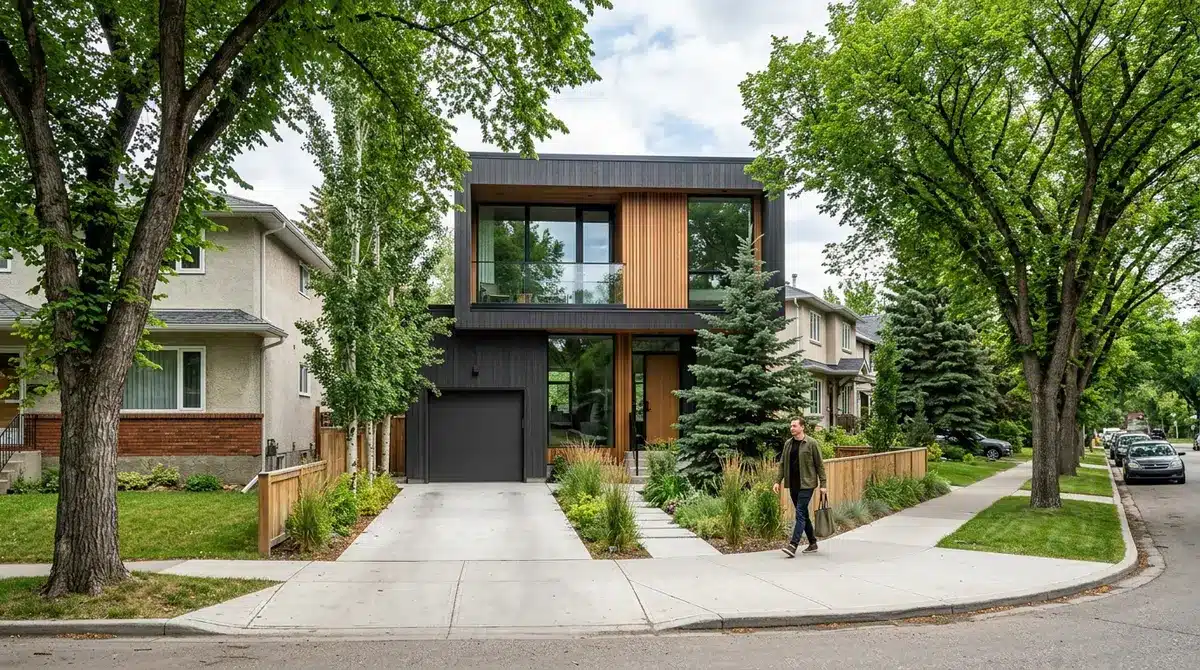
Building a New Home in an Established Neighborhood (Infill)
Constructing a modern residence in a mature community—commonly known as infill development—is highly sought after by professionals and families who prioritize location over lot size. These neighborhoods, often developed between the 1950s and 1980s, possess a unique charm that cannot be replicated overnight.
The Advantages of Mature Communities
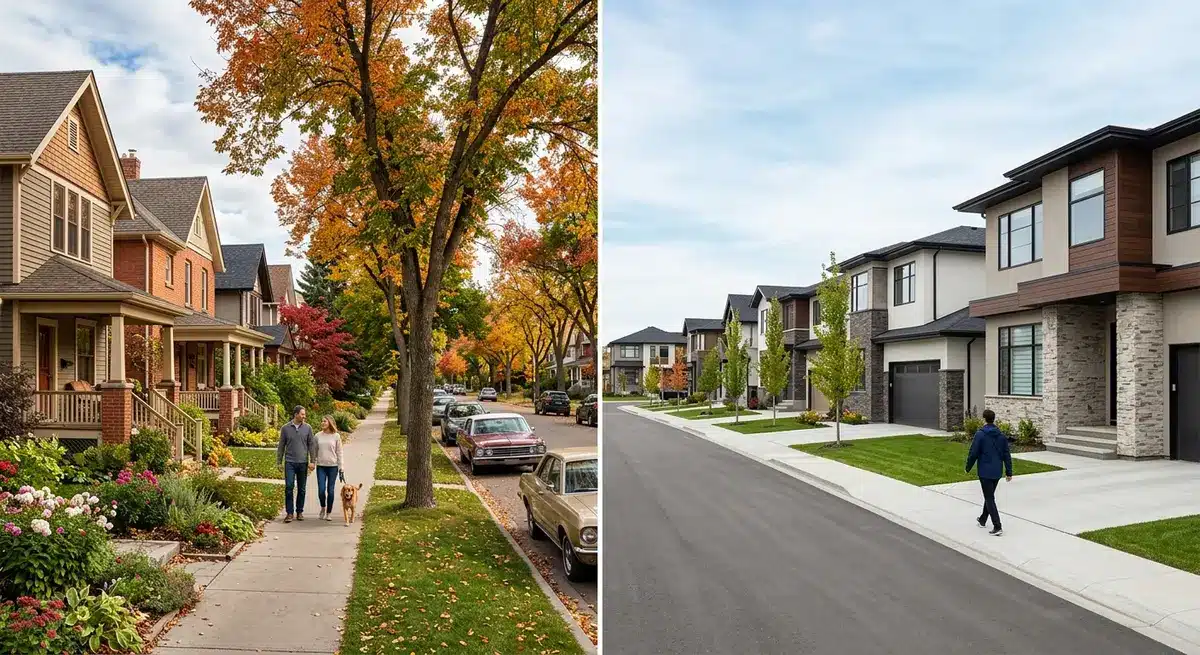
The primary draw of an established neighborhood is the immediate availability of social and physical infrastructure. Streets are lined with mature elm and ash trees, providing natural cooling and aesthetic appeal. Schools, recreation centers, and commercial nodes are already fully operational. Furthermore, central locations drastically reduce commute times to downtown business districts.
As Dr. Emily Chen, Professor of Urban Design at the University of Alberta, explains: “Mature neighborhoods offer irreplaceable social infrastructure. The walkability scores in these areas are typically 40% higher than in emerging suburbs, which has a direct, positive impact on the long-term mental and physical health of residents.”
Challenges and Hidden Costs of Infill Builds
Despite the allure, infill construction is fraught with logistical hurdles. Buyers must first purchase an existing, often dilapidated home, only to pay an additional $20,000 to $40,000 for asbestos abatement and demolition. Furthermore, older utility lines may need to be entirely replaced to support modern electrical and plumbing demands.
Navigating municipal bureaucracy is another significant hurdle. You must adhere to strict municipal landscaping standards and zoning bylaws designed to preserve the neighborhood’s character. NIMBYism (Not In My Back Yard) from existing residents can also lead to permit delays and forced architectural compromises.
Buying in a Brand-New Alberta Subdivision (Greenfield)
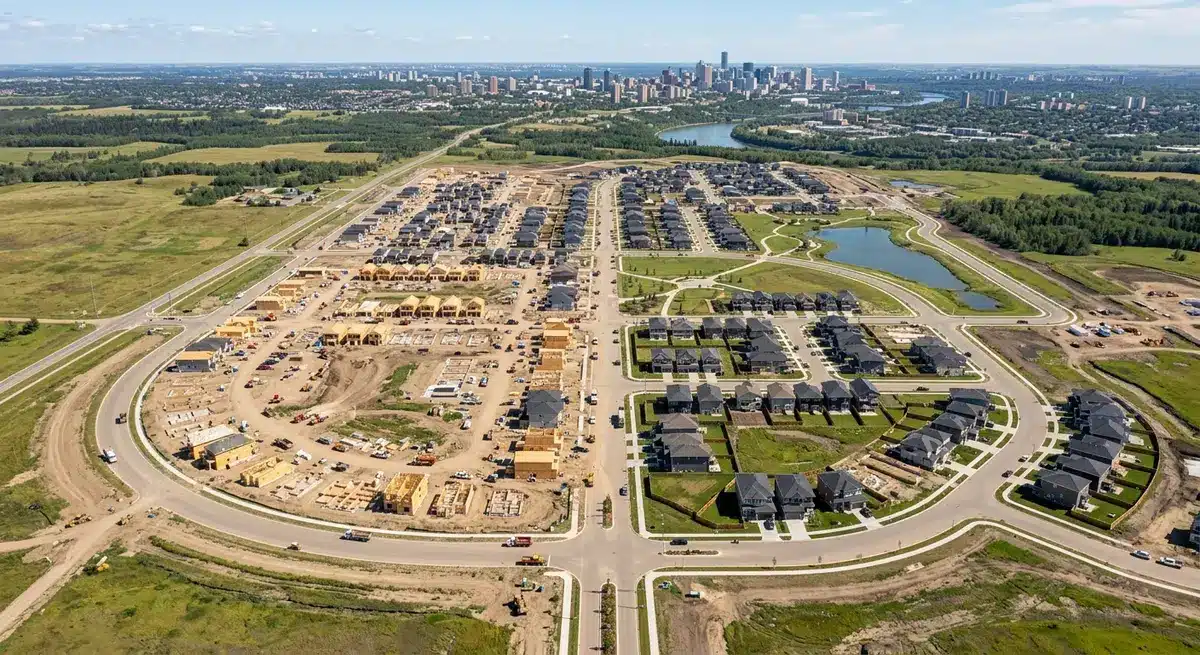
For those who prefer a blank canvas, greenfield developments—brand-new subdivisions built on previously undeveloped land—offer an entirely different set of benefits. These communities are meticulously planned by developers to cater to modern family dynamics.
Advantages of New Developments
When you build in a new subdivision, everything from the underground fiber-optic cables to the community storm ponds is engineered for the 21st century. Buyers have the freedom to select their ideal parcel of land, and selecting the perfect building lot is often a straightforward process facilitated by the builder.
These master-planned communities frequently feature integrated walking trails, artificial lakes, and dedicated commercial spaces. Additionally, the homes themselves benefit from economies of scale. Because builders are constructing dozens of homes simultaneously, the cost per square foot is generally lower than a custom infill project. You also avoid the unpredictable construction material expenses associated with retrofitting older lots.
Drawbacks to Consider
The most prominent downside to a new subdivision is the waiting game. While the developer’s brochures may show bustling retail centers and lush parks, the reality is that these amenities can take half a decade to materialize. In 2026, supply chain stabilization has improved timelines, but residents still face years of living in an active construction zone, dealing with noise, dust, and heavy machinery.
Furthermore, new communities are typically located on the extreme edges of the city. This geographic isolation can lead to increased reliance on personal vehicles, as public transit routes are often the last piece of infrastructure to be implemented. Buyers must carefully weigh these factors when researching local amenities.
Head-to-Head Comparison: Infill vs. Greenfield
To make the best decision for your family and financial portfolio, it helps to look at a direct comparison of the core factors influencing new home construction in Alberta.
| Feature | Established Neighborhood (Infill) | New Subdivision (Greenfield) |
|---|---|---|
| Initial Cost | High (Includes land + demolition) | Moderate (Land is developer-priced) |
| Infrastructure | Mature (Immediate access to transit/schools) | Developing (May take 3-5 years) |
| Lot Size | Typically larger, deeper lots | Often narrower, zero-lot-line options |
| Appreciation | Historically strong and stable | Moderate, peaks once amenities finish |
| Zoning/Permits | Complex, subject to community pushback | Streamlined via developer guidelines |
Financial Implications and Property Value Trends
The financial trajectory of your investment will differ wildly based on location. According to a 2026 housing report by the Canada Mortgage and Housing Corporation (CMHC), infill properties in major Albertan urban centers have demonstrated a 6.4% higher year-over-year appreciation rate compared to their suburban counterparts. This is largely driven by land scarcity; they simply aren’t making any more land in the city center.
Marcus Thorne, Chief Economist at a leading Alberta real estate think tank, notes: “In 2026, the premium paid for an infill lot in Calgary or Edmonton is quickly offset by the long-term retention of property value. However, greenfield builds remain the lifeblood of the market, appealing heavily to first-time buyers and growing families who prioritize maximum square footage per dollar over central proximity.”
It is also crucial to factor in property taxes. Older neighborhoods often carry higher assessed land values, leading to steeper annual tax bills. Conversely, new subdivisions may feature special assessments or Homeowner Association (HOA) fees to maintain community lakes, parks, and entry features. Understanding the urban and rural construction dynamics can help clarify these long-term carrying costs.
Step-by-Step Guide: Choosing the Right Location for Your Build
Making the final decision requires a methodical approach. Follow these steps to determine which environment aligns with your goals:
- Audit Your Daily Commute: Calculate the exact travel time from potential latest development communities to your workplace, children’s schools, and frequent recreational spots. If the suburban commute exceeds 45 minutes, an infill might be worth the premium.
- Assess Your Tolerance for Disruption: Are you prepared to live next to active framing, roofing, and paving crews for the next three years? If not, an established neighborhood is the safer bet.
- Review Municipal Zoning Bylaws: Before buying an old house to tear down, consult the city’s zoning maps. Ensure the lot allows for the square footage, height, and lot coverage you desire.
- Analyze the Utility Infrastructure: For infill builds, request a sewer line inspection and check electrical grid capacity. Upgrading a 1950s lead water service line to modern standards can add thousands to your budget.
- Consult a Specialized Builder: Not all builders operate in both spaces. Greenfield builders rely on volume and standardized plans, while infill builders specialize in custom architecture and tight-lot logistics. Choose a contractor with a proven track record in your chosen environment.
Frequently Asked Questions (FAQ)
Is it cheaper to build in a new subdivision or an established neighborhood?
It is generally cheaper to build in a new subdivision. Greenfield developments benefit from economies of scale, standardized utility hookups, and zero demolition costs, making the overall price per square foot significantly lower than an urban infill project.
How long does it take for a new subdivision to get amenities like schools and grocery stores?
In Alberta, it typically takes 3 to 5 years for a new master-planned community to establish basic commercial nodes, and up to 10 years for municipal infrastructure like schools and rapid transit stations to be fully funded and constructed.
What are the hidden costs of building an infill home?
Hidden costs for infill homes include asbestos testing and abatement, demolition of the existing structure, upgrading old municipal water and sewer lines, and potential delays caused by neighborhood zoning disputes or tree protection bylaws.
Do infill homes hold their value better than homes in new subdivisions?
Yes, historically, infill homes in central, established neighborhoods appreciate at a higher rate. The scarcity of central land drives demand, whereas new subdivisions face continuous competition from even newer developments built further out.
Can I use a volume builder for an infill project?
Most large volume builders exclusively operate in new subdivisions where they control multiple lots. Infill projects usually require specialized custom home builders who are experienced in navigating tight property lines, mature trees, and complex municipal permits.
Are property taxes higher in established neighborhoods?
Typically, yes. Because property taxes are heavily weighted on the assessed value of the land rather than just the structure, the highly desirable land in mature, central neighborhoods usually results in a higher annual tax burden.
Conclusion
Choosing between a new home in an established versus a new neighborhood in Alberta is one of the most significant financial and lifestyle decisions you will make. If you value mature trees, walkability, and shorter commutes—and have the budget to support land acquisition and demolition—an infill home in a historic district is an exceptional investment. On the other hand, if you desire modern community planning, lower upfront costs, and a predictable building process, a greenfield subdivision is likely your best path to homeownership in 2026.
Navigating zoning laws, builder selection, and lot acquisition requires expert guidance. If you are ready to start planning your dream home but aren’t sure which location suits your lifestyle, get in touch with our team today. We can help you analyze the current market data and find the perfect foundation for your future.


