



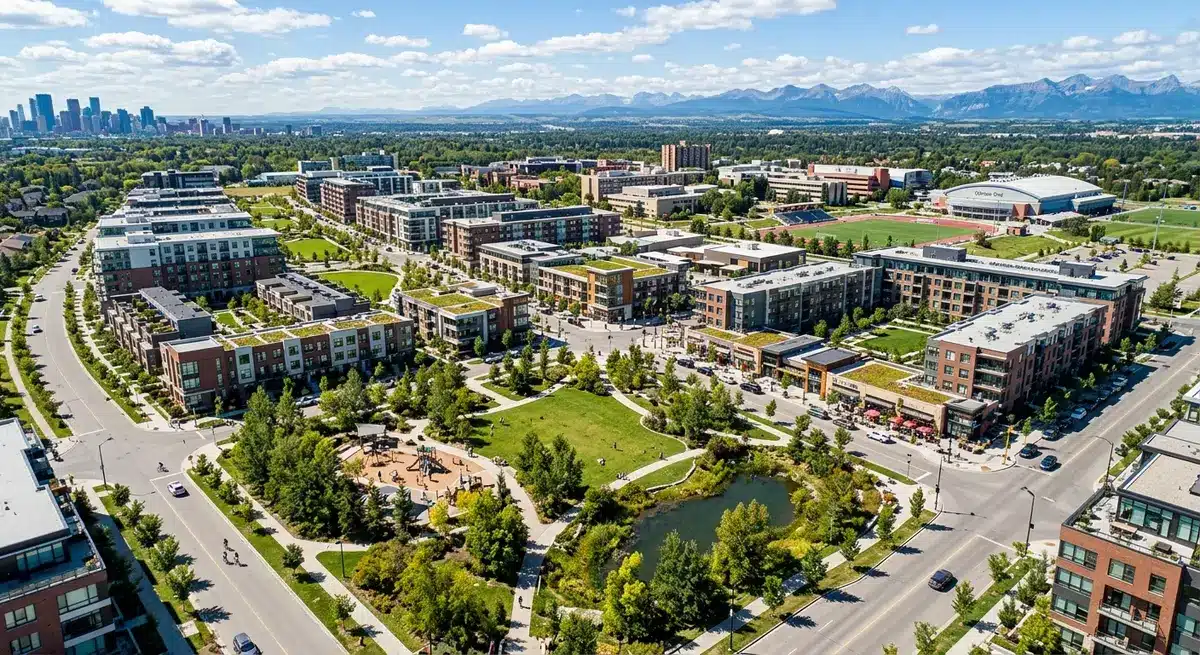
Calgary’s University District stands as a premier 200-acre master-planned community that seamlessly integrates market-rate properties with government-backed affordable housing initiatives. By blending modern residential architecture with federal housing incentives, this northwest corridor development provides moderate-income households with unprecedented access to sustainable, transit-oriented homeownership directly adjacent to the University of Calgary campus.
Key Takeaways
- Integration of federal housing affordability programs ensures inclusive homeownership for households earning 60% to 120% of the area median income.
- The 200-acre development will house approximately 12,000 residents upon its completion, emphasizing pedestrian-friendly urban design.
- Available properties range from high-efficiency condominiums to spacious single-family homes, all meeting rigorous 2026 environmental standards.
- Strategic proximity to the University of Calgary offers unmatched access to educational, cultural, and athletic facilities.
- Direct connections to Calgary’s Light Rail Transit (LRT) network provide seamless commuting to the downtown core and major employment hubs.
The Evolution of Calgary’s Premier Master-Planned Community
The University District represents a transformative approach to urban planning in Western Canada, combining residential, commercial, and institutional uses within a carefully curated environment. Emerging from a strategic partnership between the University of Calgary and private developers, this initiative transforms former endowment lands into a vibrant, world-class neighborhood. The community’s design philosophy heavily emphasizes connectivity, environmental sustainability, and an elevated quality of life.
According to recent data from Statistics Canada, master-planned communities that incorporate mixed-use zoning reduce average resident commute times by up to 34%. The University District capitalizes on this by designing streets specifically for pedestrians and cyclists. Wide sidewalks, dedicated bike lanes, and frequent green spaces encourage outdoor activities and foster organic social interaction among neighbors.
“Master-planned communities that prioritize mixed-income housing are the blueprint for sustainable urban growth in 2026,” notes Dr. Sarah Jenkins, Director of Urban Studies at the Canadian Institute of Planners. “By weaving affordable housing directly into the fabric of premium developments, we eliminate socioeconomic barriers and create truly resilient neighborhoods.”
How Federal Housing Incentives Shape the Neighborhood
A defining feature of the University District is its commitment to maintaining economic diversity through government-backed housing affordability programs. These federal initiatives ensure that a designated portion of new residential developments remains accessible to moderate-income households. This prevents the creation of isolated affordable housing blocks, instead fostering inclusive environments where residents from various income levels live side by side.
Properties built under these federal guidelines are seamlessly integrated throughout the community. They maintain the exact same architectural standards, premium finishes, and design quality as their market-rate counterparts. Eligibility for these specialized units requires households to meet specific income thresholds, which are rigorously calculated based on household size and regional market conditions. Generally, qualifying households earn between 60% and 120% of the area median income (AMI).
This strategic approach serves working families, young professionals, and essential workers who might otherwise be priced out of premium locations. For buyers looking to understand the broader landscape of new home development communities, the University District serves as a benchmark for equitable urban expansion.
Property Types: From Modern Condominiums to Spacious Townhomes
The real estate portfolio within the University District encompasses a diverse range of housing types designed to accommodate various household sizes, lifestyle preferences, and budget considerations. All structures are constructed to advanced 2026 building codes, emphasizing energy efficiency standards that drastically reduce long-term operating costs for homeowners.
Condominium units typically range from one to three bedrooms, featuring open-concept layouts and modern kitchens equipped with high-efficiency appliances. These units are highly sought after by graduate students and young professionals who value maintenance-free living. Conversely, townhome options provide more square footage and privacy, often featuring attached garages and private outdoor spaces ideal for growing families.
2026 Property Comparison Overview
| Property Type | Target Demographic | Average Size (Sq. Ft.) | Key Sustainability Features |
|---|---|---|---|
| Modern Condominiums | Young professionals, students, downsizers | 600 – 1,100 | Smart thermostats, low-flow fixtures, shared solar arrays |
| Spacious Townhomes | Growing families, faculty members | 1,200 – 1,800 | EV charging readiness, triple-pane windows, high-R insulation |
| Single-Family Homes | Established families, long-term investors | 1,800 – 2,500+ | Net-zero ready envelopes, heat pump systems, greywater recycling |
All property types incorporate advanced environmental conservation measures. These high-performance building envelopes not only benefit individual homeowners through lower utility expenses but also align with broader municipal climate goals. Buyers evaluating new construction versus resale properties often find that the energy savings in these modern builds offset higher initial purchase prices.

Step-by-Step: Qualifying for Government-Backed Housing Initiatives
Navigating the purchase of a property subsidized by federal affordability programs requires a clear understanding of compliance requirements and application procedures. The process is designed to ensure that benefits are directed toward eligible moderate-income buyers while maintaining the long-term integrity of the program.
- Income Verification: Applicants must provide comprehensive documentation, including recent tax returns and employment letters, to prove their household income falls within the 60% to 120% AMI threshold.
- Mortgage Pre-Approval: Prospective buyers must secure financing through approved lenders who are familiar with federal housing incentive structures. Exploring various financing options for Alberta homes is a critical early step.
- Program Registration: Buyers register with the provincial or municipal housing authority administering the specific affordability program within the University District.
- Property Selection: Once approved, buyers can select from designated affordable units, ensuring the property meets their spatial and lifestyle needs.
- Compliance Review and Closing: Legal professionals review the restrictive covenants—such as resale price limitations designed to preserve affordability for future buyers—before finalizing the transaction.
“The application process is rigorous by design,” explains Marcus Thorne, Senior Analyst at the Canadian Real Estate Association. “It balances the immediate need for affordable homeownership with the long-term goal of preventing market speculation on subsidized properties.”
Lifestyle and Amenities: Living Next to the University of Calgary
Living in this master-planned community provides residents with access to an exceptional array of amenities that extend far beyond typical residential developments. The community’s layout prioritizes quality of life through carefully designed public spaces, recreational facilities, and immediate access to essential services.
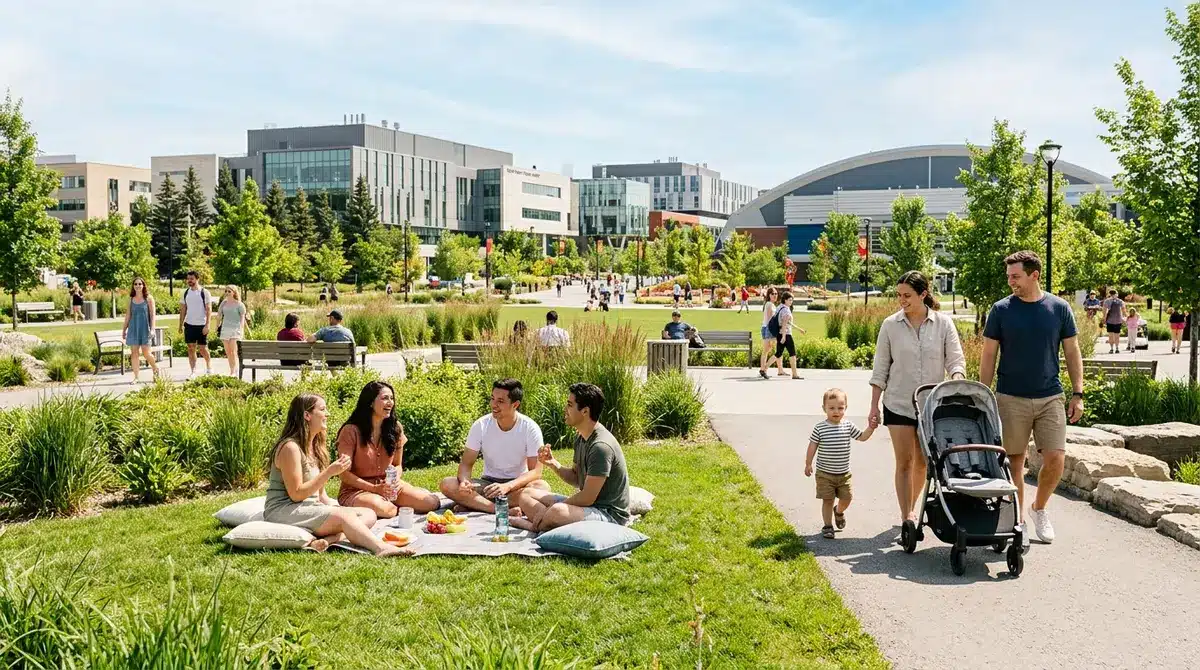
The integration of extensive parks and green spaces provides ample opportunities for outdoor recreation and environmental appreciation. These areas include modern playgrounds, community gardens, and cycling trails that connect seamlessly to Calgary’s broader regional pathway system. Furthermore, proximity to the University of Calgary grants residents unique access to world-class facilities, including Olympic-caliber athletic centers, expansive libraries, and vibrant cultural venues.
Transportation connectivity is another cornerstone of the neighborhood’s appeal. The community features direct access to Calgary Transit‘s Light Rail Transit (LRT) system. This provides cost-effective, efficient connections to the downtown core and major employment centers, solidifying its reputation as one of the best neighbourhoods for families and working professionals alike.
Strategic Investment Potential in the Northwest Corridor
Properties within this development offer compelling investment potential, combining the stability of institutional anchors with the rapid growth of Calgary’s northwest corridor. The unique combination of affordability requirements and premium location creates distinct opportunities for long-term value appreciation and robust rental yields.
The constant influx of students, faculty, and university staff ensures sustained housing demand. Research from the Canada Mortgage and Housing Corporation indicates that residential properties located within a 15-minute walk of major Canadian universities experience vacancy rates consistently below 2%, even during broader economic downturns. This institutional anchor provides remarkable stability to the local real estate market.
Furthermore, ongoing infrastructure investments, including highway enhancements and commercial retail expansion, continue to elevate the area’s profile. Investors reviewing the latest real estate market analysis frequently identify the University District as a top-performing submarket. The master-planned nature of the development ensures that growth proceeds in an organized, sustainable manner, protecting property values and maintaining community character over the long term.
For those navigating the complexities of purchasing in this high-demand area, having property transactions explained by local experts is highly recommended to maximize investment returns and ensure compliance with all community guidelines.
Frequently Asked Questions (FAQ)
What makes the University District different from other Calgary neighborhoods?
The University District is a 200-acre master-planned community built on former endowment lands. It uniquely integrates market-rate housing with government-backed affordability programs while offering direct pedestrian access to the University of Calgary campus and major transit hubs.
Who qualifies for the affordable housing initiatives in this community?
Qualification is primarily based on household income, which must typically fall between 60% and 120% of the area median income. Applicants must also demonstrate mortgage readiness and intend to use the property as their primary residence.
Are the subsidized properties built to the same standards as market-rate homes?
Yes. Properties built under federal affordability guidelines are seamlessly integrated into the community and feature the exact same architectural standards, energy-efficient technologies, and premium finishes as market-rate units.
What sustainability features are standard in 2026 builds here?
New constructions in 2026 feature high-performance building envelopes, triple-pane windows, smart climate control systems, and EV charging readiness. Many single-family homes are also built to net-zero ready standards.
How does proximity to the university affect property values?
Institutional anchors like major universities provide significant market stability. Properties in these areas historically experience lower vacancy rates, consistent rental demand, and steady long-term value appreciation compared to isolated suburban developments.
Can I rent out a property purchased through an affordability program?
Properties purchased through specific government-backed homeownership affordability programs typically have strict owner-occupancy requirements and restrictive covenants regarding rentals to prevent market speculation. Always review the specific program terms before purchasing.
Conclusion
The University District in Calgary represents the pinnacle of modern urban planning in 2026. By successfully marrying premium residential development with vital federal housing affordability initiatives, it offers an inclusive, sustainable, and highly connected lifestyle. Whether you are a first-time buyer looking to enter the market through moderate-income programs, a family seeking proximity to world-class educational facilities, or an investor analyzing current housing trends for stable returns, this community delivers exceptional value.
Navigating the intersection of premium real estate and government-backed housing programs requires specialized knowledge and strategic planning. If you are ready to explore your options in this dynamic neighborhood or need assistance understanding your eligibility for affordability incentives, our team of local experts is here to help. Contact our team today to begin your journey toward homeownership in Calgary’s most innovative community.


