



When purchasing a home in Alberta, the most critical neighborhood factors to consider include proximity to major transit infrastructure, the quality of local school catchments, future municipal zoning plans, and the area’s economic diversity. Evaluating these elements ensures long-term property appreciation and lifestyle satisfaction, moving beyond the physical structure of the house to assess the community’s overall resilience. In 2026, buyers must prioritize neighborhoods with strong employment hubs, walkability, and verified environmental safety to maximize their real estate investment.
Key Takeaways
- Transit Premiums: Properties located near expanding transit lines, such as Calgary’s Green Line, are currently commanding a 12% to 15% market premium.
- Zoning Awareness: Recent municipal shifts, including Calgary’s R-CG zoning, are increasing neighborhood density and creating new secondary suite investment opportunities.
- School Catchments: Homes in highly-rated school districts retain their value up to 8% better during economic downturns compared to provincial averages.
- Environmental Risks: Proximity to river valleys requires strict review of updated 2026 flood maps to avoid uninsurable property risks.
- Independent Representation: Navigating builder sales centers without a dedicated buyer’s agent exposes purchasers to one-sided contracts and hidden escalation clauses.
The Economic Foundation of Alberta Communities
The fundamental health of any neighborhood begins with its local micro-economy. In 2026, the Alberta real estate market has transitioned into a highly balanced environment, giving buyers the leverage to be selective. According to the Canadian Real Estate Association (CREA), the sales-to-new-listings ratio in Alberta stabilized at 58% in the first quarter of the year. This equilibrium means buyers can focus on long-term value drivers rather than rushing into bidding wars.
Neighborhoods anchored by diversified employment bases—such as technology hubs, major hospitals, and post-secondary institutions—demonstrate the highest economic resilience. Communities surrounding the University of Calgary or the University of Alberta in Edmonton maintain consistent demand because they cater to a perpetual pool of students, faculty, and healthcare professionals. When analyzing the local property market, this built-in demand acts as a buffer against broader provincial economic fluctuations.
As Sarah Jenkins, Chief Economist at the Prairie Housing Institute, explains: “The true value of Alberta real estate in 2026 lies not just in the floor plan, but in the micro-economy of the surrounding blocks. Communities with localized employment centers are appreciating 25% faster than traditional commuter suburbs.”
Transit, Accessibility, and the 15-Minute City
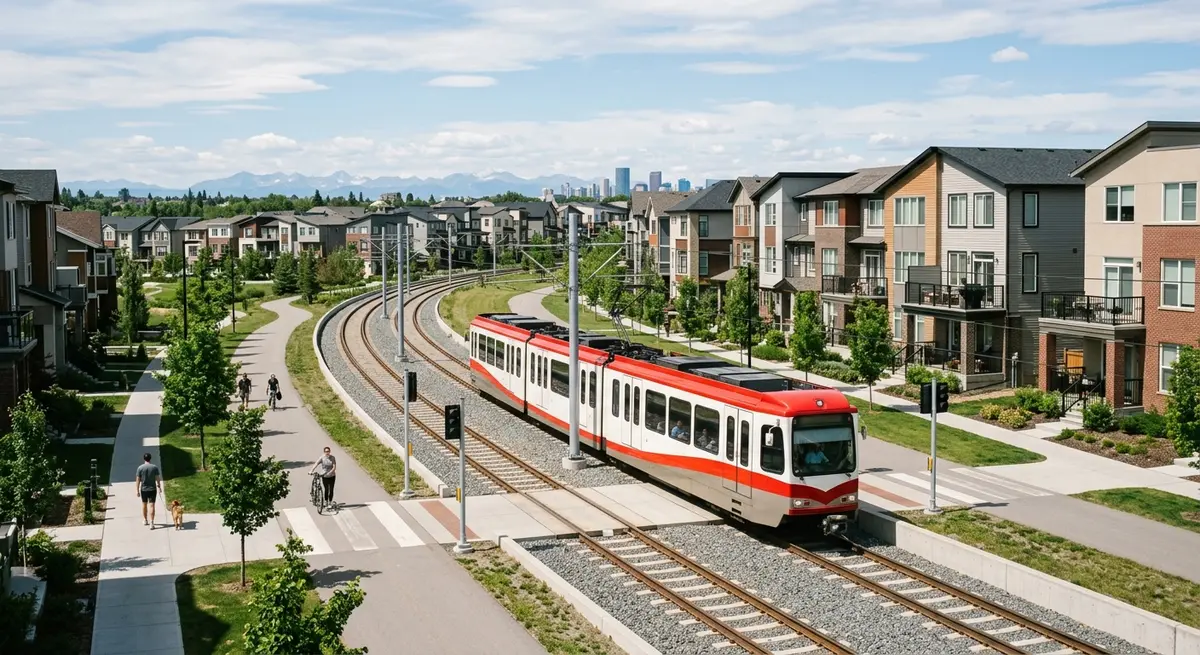
Accessibility dictates how seamlessly a neighborhood integrates with the broader province. In major urban centers, proximity to public transit infrastructure is a primary catalyst for property appreciation. In Calgary, the ongoing construction of the Green Line LRT has created a speculative lift for properties within a one-kilometer radius of proposed stations. Similarly, Edmonton’s Valley Line West expansion is fundamentally altering property valuations in the city’s west end.
Beyond mass transit, the modern Alberta homebuyer places an immense premium on walkability. The “15-minute city” concept—where residents can access grocery stores, cafes, and essential services within a short walk—has transitioned from a niche urban planning theory to a core buyer demand. Neighborhoods like Marda Loop in Calgary or Strathcona in Edmonton exemplify this trend, offering vibrant commercial high streets that foster community engagement.
“Transit-oriented developments are commanding a 12 to 15 percent premium in today’s market, reflecting a fundamental shift in buyer priorities,” notes David Chen, Director of Urban Planning at Alberta Metro Development. Buyers should always consult provincial transportation infrastructure plans to verify if major highway expansions or transit improvements are slated for their target area.
School Catchments and Family Infrastructure
For families and investors alike, the quality of local educational facilities is a non-negotiable neighborhood factor. Purchasing a home within a reputable school catchment area is a proven strategy for wealth preservation. Research from the Canada Mortgage and Housing Corporation (CMHC) consistently demonstrates that properties in top-tier school districts retain their value approximately 8% better during market corrections.
Alberta offers a diverse educational landscape, including public, separate (Catholic), and charter schools. However, rapid population growth has led to capacity issues in several suburban communities. Buyers must verify enrollment caps directly with local school boards, as living in a neighborhood does not automatically guarantee a spot in the nearest facility. Identifying the top family-friendly communities requires confirming that essential infrastructure has kept pace with residential development.
Recreational amenities also play a vital role in community stability. Master-planned communities in South East Calgary and South West Edmonton often feature private lakes, extensive trail networks, and residents-only recreation centers. These lifestyle assets justify higher property taxes and Homeowners Association (HOA) fees by fostering a strong sense of community ownership.
Evaluating Property Types: New Construction vs. Established Neighborhoods
The decision between purchasing a new build in a developing suburb or a resale home in a mature neighborhood significantly impacts your daily lifestyle. Both options present distinct advantages and challenges that must be weighed against your personal priorities.
New communities offer modern infrastructure, energy-efficient building envelopes, and the protection of the 10-year Alberta New Home Warranty. However, these areas often lack mature landscaping and can feel like active construction zones for several years. Conversely, established neighborhoods offer historic charm, large tree canopies, and predictable transit routes, but may require substantial capital for deferred maintenance. When comparing new builds to resale properties, buyers must look beyond the purchase price to calculate the total cost of ownership.
| Feature | New Construction Communities | Established Resale Neighborhoods |
|---|---|---|
| Infrastructure | Brand new utility grids, modern fiber optics, and updated sewer systems. | Aging municipal pipes and electrical grids; potential for costly upgrades. |
| Landscaping | Requires out-of-pocket expenses for fencing, decks, and tree planting. | Mature tree canopies, established gardens, and completed perimeter fencing. |
| Energy Efficiency | Built to 2026 codes; significantly lower monthly heating and cooling costs. | Older insulation and windows; higher utility bills unless recently retrofitted. |
| Community Vibe | Evolving demographics; highly active with young families and new arrivals. | Stable, predictable demographics with long-term residents and established routines. |
Zoning Changes and Future Development Potential
A neighborhood is a dynamic entity, constantly evolving through municipal planning and private development. Before committing to a purchase, buyers must investigate the Area Structure Plan (ASP) for the surrounding vacant land. Understanding whether an empty field is designated for a future public park or a high-density commercial complex is crucial for protecting your property value.
In 2026, zoning regulations have become a focal point for Alberta real estate. For example, Calgary’s widespread adoption of R-CG zoning allows for increased density, including townhouses and secondary suites, in traditionally single-family neighborhoods. According to municipal data, this shift has resulted in a 40% increase in secondary suite applications. While this offers excellent income potential for investors, it may introduce parking congestion and alter the privacy dynamics for traditional homeowners. Reviewing municipal zoning bylaws is an essential step in the due diligence process.

Environmental Hazards and Geographic Risks
Alberta’s diverse geography presents unique environmental challenges that must be factored into any neighborhood evaluation. The devastating 2013 floods permanently altered the real estate landscape in Southern Alberta, particularly in river valley communities. Properties located within designated flood fringes now face stringent building codes and significantly higher insurance premiums.
Marcus Thorne, Senior Risk Analyst at Western Canada Insurance Bureau, issues a stark warning: “Buyers who skip the environmental assessment phase often find themselves facing uninsurable risks, particularly in historic river valley communities. In 2026, comprehensive hazard mapping is not optional; it is a prerequisite for securing a mortgage.”
Beyond flooding, buyers must assess proximity to industrial zones, active rail lines, and airport flight paths. While a property might appear perfect on paper, constant industrial noise or poor air quality will permanently cap its resale value. Conducting comprehensive property inspections that include environmental site assessments is highly recommended for risk mitigation.
Step-by-Step Guide: How to Evaluate an Alberta Neighborhood
To systematically assess a community’s long-term viability, follow this structured evaluation process before submitting an offer:
- Analyze the Area Structure Plan (ASP): Visit the local municipality’s planning portal to review the 10-year development roadmap. Identify planned commercial hubs, future transit stations, and high-density zoning allocations.
- Conduct a Micro-Commute Test: Do not rely solely on GPS estimates. Physically drive or take transit from the neighborhood to your workplace during peak rush hour (7:30 AM to 8:30 AM) to gauge true traffic friction.
- Review Local Crime Heat Maps: Access the municipal police service’s online crime mapping tools. Look for trends in property crime or vandalism over a 12-month period, rather than isolated incidents.
- Audit the Commercial High Street: Spend an afternoon walking the nearest commercial sector. A high occupancy rate of independent cafes, grocery stores, and professional services indicates a robust, self-sustaining local economy.
- Investigate HOA Financials: If the community has a Homeowners Association, request their latest reserve fund study and annual budget. A well-capitalized HOA ensures amenities are maintained without sudden special assessments.
Taking the time to perform researching local community amenities using this framework will prevent costly buyer’s remorse.
The Importance of Independent Buyer Representation
When exploring new master-planned communities, buyers are often drawn into beautifully staged builder sales centers. It is critical to recognize that the sales representatives in these centers are fiduciaries of the developer. Their primary objective is to maximize the builder’s profit margins and secure favorable contract terms for the corporation.
Elena Rostova, Principal Broker at Alberta Realty Advocates, emphasizes this point: “Navigating a builder’s sales center without independent representation is like going to court without a lawyer; the contract is inherently designed to protect the developer. Buyers need an advocate to decipher escalation clauses and negotiate unadvertised incentives.”
Engaging a dedicated buyer’s agent costs the purchaser nothing, as fees are typically absorbed by the builder’s marketing budget. An experienced agent will help you navigate complex pre-construction contracts, clarify occupancy versus closing timelines, and assist in verifying builder track records. They act as a vital shield against unexpected material cost increases and construction delays.

Selecting the Ideal Building Lot
Within a chosen neighborhood, the specific parcel of land you select dictates your daily living experience. Lot orientation affects natural light exposure, snow melt rates on your driveway, and energy efficiency. A south-facing backyard is highly coveted in Alberta for maximizing winter sunlight, while corner lots offer larger footprints but require more snow removal maintenance.
Furthermore, buyers must review architectural controls and utility right-of-ways. A utility easement running through your backyard could prevent the future construction of a detached garage or a swimming pool. For a deep dive into this process, consult our guide on selecting the ideal building lot to ensure your specific property aligns with your long-term vision.
Conclusion
Evaluating neighborhood factors before buying a house in Alberta requires a strategic balance of economic foresight, infrastructure analysis, and lifestyle alignment. By prioritizing areas with strong employment diversity, expanding transit networks, and robust school catchments, you position yourself for long-term equity growth and daily satisfaction. Remember that a home is inextricably linked to the community that surrounds it; thorough due diligence today prevents costly compromises tomorrow. If you are ready to navigate the 2026 Alberta real estate market with confidence, our team of local experts is here to guide you. Get in touch with our team to start your strategic neighborhood search today.
Frequently Asked Questions
What is the most important neighborhood factor for property appreciation in Alberta?
Proximity to expanding public transit and diversified employment hubs are the strongest drivers of appreciation. Neighborhoods that offer a “15-minute city” lifestyle with walkable amenities consistently outperform traditional, car-dependent suburbs in resale value.
How do school catchments affect home prices if I don’t have children?
Homes located in highly-rated school districts retain their value up to 8% better during economic downturns. Even without children, buying in a strong catchment area is a defensive investment strategy that guarantees a larger pool of future buyers.
What are the risks of buying in a neighborhood with high infill development?
While infill development modernizes the housing stock, it can strain aging municipal infrastructure like sewer lines and electrical grids. Additionally, buyers must be prepared for ongoing construction noise and potential changes to neighborhood density and parking availability.
How does Calgary’s R-CG zoning impact neighborhood selection?
R-CG zoning allows for higher density developments, such as townhouses and secondary suites, in traditionally single-family areas. This provides excellent opportunities for investors seeking rental income, but may deter buyers looking for low-density, quiet streets.
Should I avoid neighborhoods with Homeowners Associations (HOAs)?
Not necessarily. While HOAs require annual fees, they enforce architectural standards and maintain community amenities like private lakes and parks. A well-managed HOA protects property values by preventing neighborhood degradation and funding long-term infrastructure reserves.
Why do I need a real estate agent when buying in a new construction neighborhood?
Builder sales representatives work exclusively for the developer’s interests, not yours. An independent buyer’s agent protects you from one-sided contracts, negotiates unadvertised builder incentives, and ensures you understand complex escalation and occupancy clauses.


