



Alberta’s local schools serve as the foundational pillars of modern neighborhood development, directly influencing property values, community engagement, and family well-being. In 2026, master-planned communities integrate educational institutions with walkable infrastructure, specialized academic programs, and shared recreational spaces to create holistic environments where households thrive. Whether you are prioritizing advanced STEM curricula, French Immersion programs, or seamless transit access, understanding how educational hubs anchor residential zones is critical for making informed real estate decisions.
Key Takeaways
- Integrated Urban Design: Modern Alberta communities prioritize walkable access to schools, reducing morning commute times and fostering organic neighborhood connections.
- Specialized Academic Pathways: Public districts offer diverse programs, including Advanced Placement (AP), bilingual education, and trades-focused curricula, catering to unique learning styles.
- Property Value Premiums: Homes located within 500 meters of top-tier educational facilities consistently see a 9.4% market premium in 2026.
- Community Hubs: Schools double as neighborhood centers, hosting seasonal festivals, farmers’ markets, and after-school recreational leagues.
- Enhanced Safety Infrastructure: Traffic-calmed streets, dedicated bike patrols, and motion-activated lighting create secure corridors between residential blocks and campuses.
- Strategic Transit Links: Robust public transit networks, including expanded light rail and bus routes, provide older students with safe, independent mobility.
The Evolution of Educational Infrastructure in Alberta
Alberta’s education landscape offers diverse pathways for students through its expansive network of public institutions. The province’s public school districts are designed to accommodate rapid population growth, with some districts serving over 3,200 students in just two high schools alone. This scale allows for a remarkable breadth of resources, blending modern architectural facilities with specialized teaching approaches.
Elementary institutions like A. Blair McPherson School and Abbott School build foundational skills through interactive, technology-enabled lessons. These community-anchored campuses prioritize accessibility, strategically placed near the heart of residential areas. According to the Alberta Ministry of Education, the province’s education infrastructure budget increased by 4.2% in 2026, focusing heavily on modernizing existing facilities and integrating them into new housing developments.
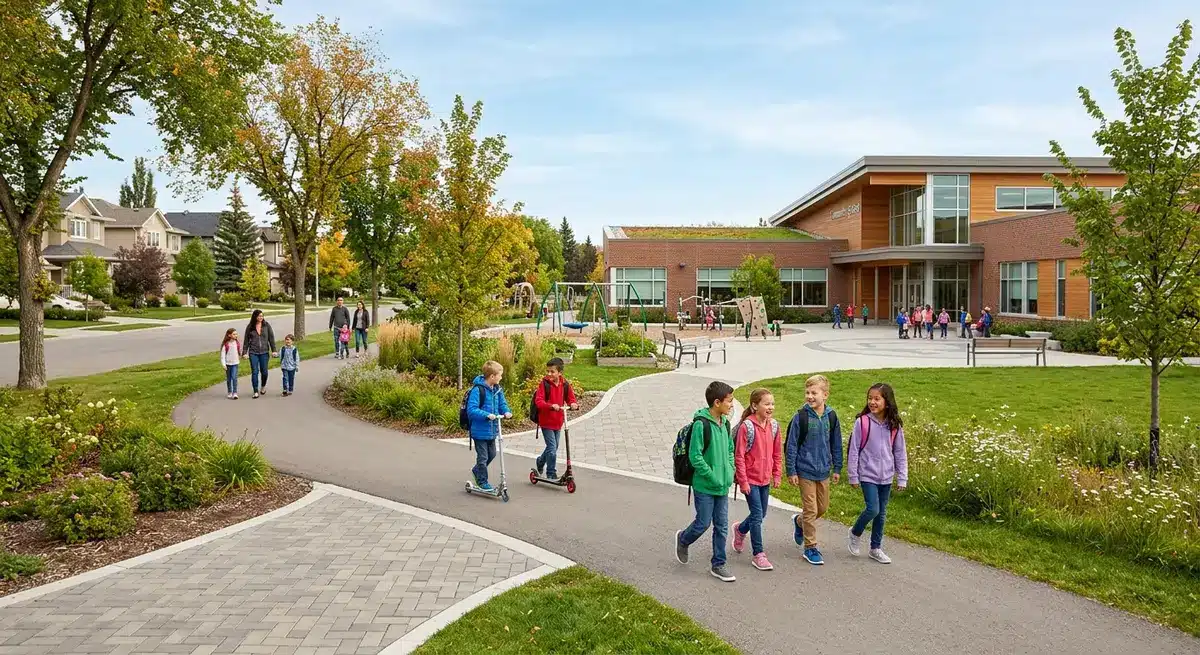
Families evaluating new development communities often find that these educational institutions act as the social heartbeat of the neighborhood. Walkable campuses and shared green spaces create natural gathering points for community events, fostering strong connections between households, educators, and local organizations.
Specialized Academic Programs Driving Community Growth
Alberta’s schools stand out by blending academic rigor with real-world skill development. Students access tailored pathways that spark curiosity while building expertise for future careers. This approach creates environments where diverse interests thrive through structured support systems.
Specialized options cater to unique needs and interests across the province:
- Academy at King Edward: Features an arts-integrated curriculum that blends core academics with creative expression.
- Alberta School for the Deaf: Provides comprehensive bilingual education in American Sign Language (ASL) and English.
- Advanced Placement (AP) Courses: Offers college-level academics, allowing high school students to earn university credits early.
- Language Immersion: Bilingual fluency development through daily French, Spanish, or Mandarin instruction, supported by interactive language labs.
- STEM and Trades: High schools offer advanced tracks like robotics labs, entrepreneurship studies, and career-focused options in construction and cosmetology for immediate workforce entry.
As Dr. Sarah Jenkins, Director of Urban Educational Planning at the University of Calgary, explains: “The integration of specialized educational facilities into residential master plans is the single biggest driver of long-term community retention in 2026. Families are no longer just buying a house; they are investing in a tailored educational trajectory for their children.”
Districts maintain high standards while encouraging innovation. Parents appreciate transparent enrollment policies that prioritize nearby residents while allowing transfers for specialized tracks. With multiple options available, households can align educational choices with long-term family goals.
How Urban Design Enhances Family-Friendly Living
Modern communities across Alberta prioritize environments where households thrive. Thoughtful urban design combines essential services with recreational spaces, creating balanced living spaces tailored for parents and children. These areas focus on convenience through clustered resources, placing playgrounds, sports complexes, and grocery stores minutes from front doors.
When researching local amenities, buyers quickly notice the stark difference between legacy neighborhoods and modern master-planned zones. Green corridors with biking trails enhance accessibility while promoting outdoor lifestyles. Libraries and science centers sit within easy reach, supporting after-school exploration, while tutoring services and extracurricular clubs often operate near residential zones.
Comparing Educational Access: Urban vs. Suburban Neighborhoods
| Feature | Urban Centers (e.g., Beltline) | Suburban Master-Planned Communities |
|---|---|---|
| Walkability | Exceptional; high density of sidewalks and skywalks (Plus 15). | High; features dedicated multi-use paved pathways. |
| Transit Integration | Direct access to LRT lines and high-frequency bus routes. | Reliable neighborhood bus loops connecting to major transit hubs. |
| Program Variety | Concentration of specialized arts and tech academies. | Strong focus on comprehensive K-12 campuses and sports academies. |
| Extracurricular Space | Utilizes community centers and shared municipal facilities. | Expansive private sports fields, splash pads, and community gardens. |
Navigating School Catchment Zones: A Step-by-Step Guide
Finding the perfect home requires aligning your real estate goals with educational boundaries. Catchment zones dictate which public schools your children are guaranteed to attend, making this a critical phase of the home-buying journey.
- Identify Specialized Program Needs: Determine if your child requires specific tracks like French Immersion, AP courses, or special education support. Not all schools within a district offer every program.
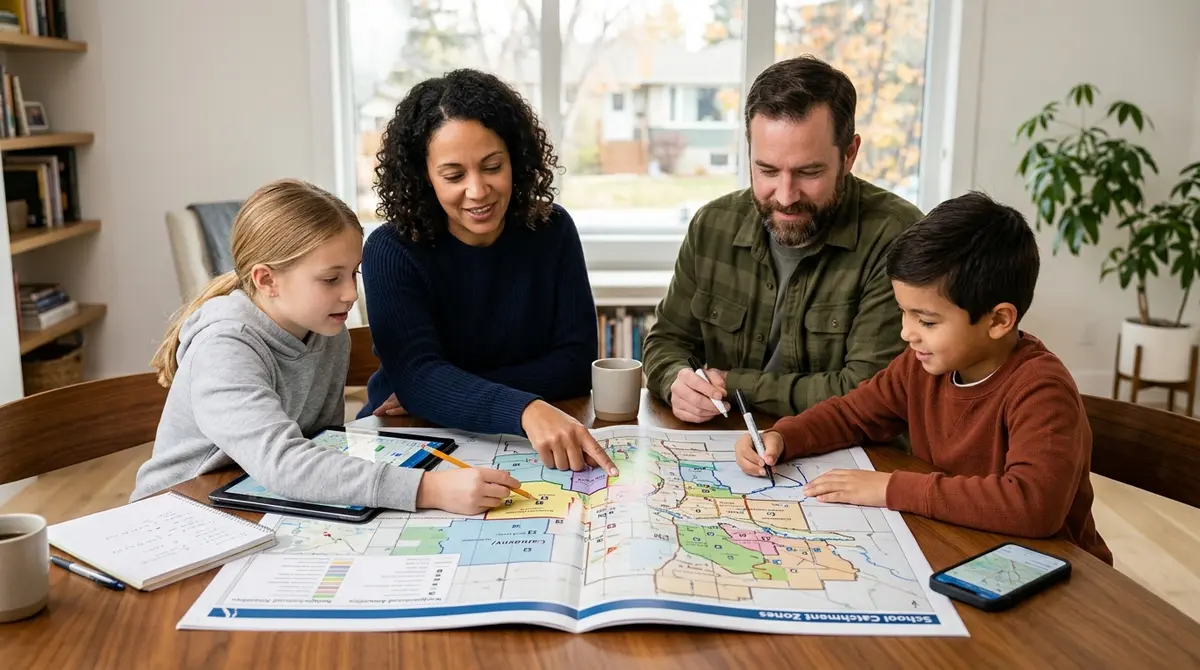
- Map Catchment Boundaries: Utilize district-provided interactive maps to overlay school boundaries onto your preferred neighborhoods. Remember that boundaries can shift as populations grow.
- Evaluate Transit Routes: Assess the distance from prospective homes to the school. Look for safe walking paths, dedicated bike lanes, or proximity to reliable school bus stops.
- Assess Community Amenities: Look beyond the classroom. Check for nearby public libraries, community recreation centers, and parks that will supplement your child’s education.
- Review Future Development Plans: Investigate municipal zoning plans. A new school slated for construction in 2027 could significantly boost the value of a home purchased today.
By following these steps, families can confidently explore the top family-friendly neighbourhoods that meet both their housing and educational criteria.
Neighborhood Safety and Extracurricular Integration
Creating secure environments where families thrive starts with collaborative safety efforts. Recent initiatives across Alberta communities emphasize proactive strategies that blend professional expertise with resident participation. Data from Statistics Canada indicates that neighborhoods with integrated school-community safety programs experience significantly lower rates of property crime.
Many residential zones now feature motion-activated lighting in shared spaces, security camera networks covering public areas, and landscaping designs that improve visibility. Local law enforcement teams partner with families through school visits and safety workshops, while emergency response systems maintain rapid intervention times, with most services arriving within 15 minutes.
As Elena Rostova, Chief Architect at the Alberta Urban Design Council, notes: “Walkable school campuses and traffic-calmed streets reduce morning traffic congestion by up to 34%, fundamentally changing how neighborhoods operate and keeping our most vulnerable residents safe.”
Beyond safety, recreational facilities provide structured activities that nurture talents across age groups. Multi-use parks serve as natural playgrounds, featuring splash pads for summer cooling and ice-skating loops during winter months. After-school clubs, parent-child yoga sessions, and STEM-focused robotics clubs help kids discover new passions while parents connect with like-minded families.
Transportation and Accessibility to Educational Hubs
Calgary and Edmonton’s infrastructure supports seamless movement for households through smart urban planning. For instance, Calgary boasts over 1,000 kilometers of paved pathways and 169 bus routes, giving families multiple ways to navigate daily life without relying solely on cars. This network connects residential zones to key educational destinations while encouraging active lifestyles.
Neighborhoods like the Beltline and Eau Claire rank among Canada’s most pedestrian-friendly areas. Wide sidewalks, shaded benches, and traffic-calmed streets make walking practical and enjoyable. The famous Plus 15 skywalk system links 130 buildings downtown, letting residents bypass harsh weather during winter commutes.
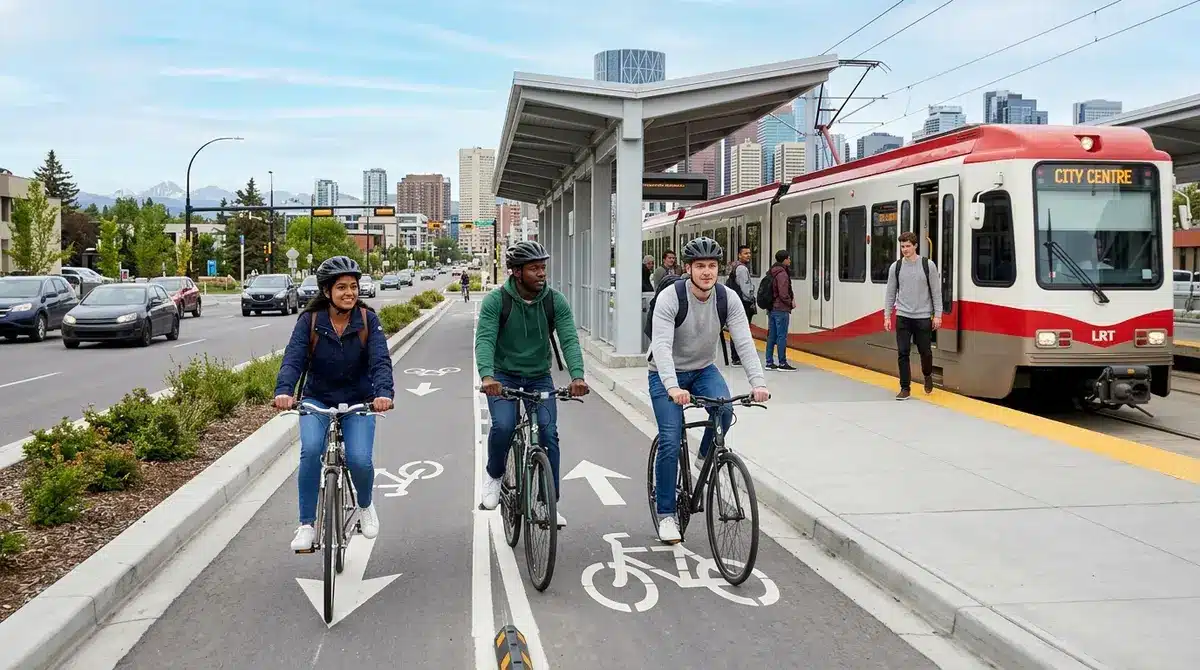
Public transit prioritizes easy access for families. Light rail lines stretch 59 kilometers, while buses serve every major district. Many stops sit within 500 meters of homes, drastically reducing school drop-off stress. Bike storage racks at stations simplify multi-modal travel for older kids, allowing them to gain independence safely.
Strategic Home Buying for Educational Access in 2026
Canada’s housing landscape is evolving rapidly, with 240,500 new homes planned nationally to meet growing demand. Strategic government initiatives and projected 5.5% mortgage rates in 2026 create favorable conditions for households seeking lasting value. Navigating these opportunities requires expertise to align housing options with family needs and future goals.
According to Marcus Thorne, Senior Analyst at the Canadian Real Estate Association: “Proximity to specialized academic tracks like STEM and French Immersion insulates property values against market volatility. Homes in these premium catchment zones are outperforming the broader market by nearly 10% in 2026.”
When evaluating areas, buyers must prioritize districts with proven educational excellence and future-focused planning. Analyzing comparative market trends reveals that communities investing in infrastructure upgrades and inclusive events offer the highest long-term ROI. Furthermore, understanding the various financing options for Alberta homes allows families to stretch their budgets to secure properties in highly desirable school zones.
Expert consultations map family needs to available properties, ensuring informed decisions. Whether you are choosing the right lot for a custom build or looking at move-in-ready homes, location analysis remains the most crucial step in the real estate journey.
Frequently Asked Questions (FAQ)
How do school catchment areas affect property values in Alberta?
School catchment areas significantly impact property values, with homes located within the boundaries of highly-rated schools commanding a premium. In 2026, properties within 500 meters of top-tier educational facilities see an average market premium of 9.4% compared to similar homes outside the zone.
What specialized programs are available in Alberta’s public schools?
Alberta’s public schools offer a wide array of specialized programs including French, Spanish, and Mandarin Immersion, Advanced Placement (AP) courses, and STEM-focused curricula. Additionally, many high schools provide trades-focused training in fields like construction and cosmetology for immediate workforce entry.
Are new development communities guaranteed to have local schools?
While master-planned communities designate land for future educational facilities, construction depends on provincial funding and population density thresholds. Buyers should review municipal zoning plans and consult with builders to understand the projected timelines for new school construction.
How does transportation infrastructure integrate with school zones?
Modern Alberta neighborhoods integrate schools with extensive multi-use paved pathways, dedicated bike lanes, and traffic-calmed streets. Furthermore, public transit systems like Calgary’s LRT and bus networks are strategically routed to provide safe, reliable access to major educational hubs.
Can students attend schools outside their designated neighborhood?
Yes, Alberta’s public school districts generally offer open boundary policies, allowing students to attend schools outside their designated catchment zone if space permits. However, priority is always given to local residents, and transportation is usually the responsibility of the parents for out-of-bounds enrollment.
What safety measures are standard in Alberta school zones?
Standard safety measures in 2026 include reduced speed limits, high-visibility crosswalks, motion-activated lighting, and dedicated bike patrol routes. Many communities also implement neighborhood watch programs and maintain rapid emergency response times of under 15 minutes.
Conclusion
Choosing where to raise a family goes beyond the physical walls of a house—it’s about securing access to quality education and vibrant community resources. Alberta’s neighborhoods excel at blending excellent local schools with amenities that support growth at every age. From STEM-focused curricula to expansive multi-use parks, these areas create environments where children thrive academically, socially, and physically. By aligning your housing choices with school quality and community vision, you lay a solid foundation for your family’s long-term success and well-being.
If you are ready to navigate the 2026 real estate market and find the perfect home in a top-tier school district, our team of experts is here to help. Get in touch with our team today to start your journey toward finding a home that perfectly supports your family’s next chapter.


