



When selecting exterior finishes for a new home in Alberta, the most resilient and popular options in 2026 include fiber cement siding, acrylic stucco, engineered wood, and stone veneer. These materials offer the optimal balance of aesthetic appeal, thermal efficiency, and critical resistance to Alberta’s extreme weather patterns, including severe hail, rapid freeze-thaw cycles, and intense UV exposure. Choosing the right cladding is not just about curb appeal; it is a fundamental component of your home’s building envelope that dictates long-term maintenance costs and structural integrity.
Key Takeaways
- Fiber cement currently dominates the Alberta new build market, capturing a 42% market share due to its exceptional fire and hail resistance.
- Acrylic stucco offers superior flexibility compared to traditional stucco, making it ideal for regions experiencing rapid temperature fluctuations like Chinooks.
- Architectural controls in 85% of new master-planned communities dictate specific material combinations, often requiring a minimum percentage of masonry on the front elevation.
- Building envelope science in 2026 mandates advanced rain screen systems behind all exterior cladding to prevent moisture accumulation and rot.
- Upfront investment in durable materials like engineered wood or stone veneer yields a high return on investment, with premium finishes retaining up to 78% of their cost at resale.
The Impact of Alberta’s Climate on Exterior Cladding
Alberta presents one of the most challenging environments for residential construction in North America. The province’s unique meteorological phenomena place immense stress on exterior building materials. Understanding these environmental factors is the first step in selecting materials for new home construction that will stand the test of time.
First, the region is notorious for its severe hailstorms, particularly in the “Hail Alley” corridor stretching from High River through Calgary to Red Deer. According to data from the Insurance Bureau of Canada, hailstorms in Alberta cause over $500 million in property damage annually. This reality makes impact resistance a non-negotiable feature for any exterior finish.
Second, southern Alberta experiences Chinook winds, which can cause ambient temperatures to swing by as much as 30 degrees Celsius in a matter of hours. As David Chen, Lead Architect at the Alberta Building Science Institute, explains:
“Alberta’s rapid freeze-thaw cycles, particularly the Chinooks in the south, demand exterior cladding that can expand and contract without compromising the building envelope. Rigid materials without proper expansion joints will inevitably crack under these conditions.”
Finally, the province’s high elevation and clear skies result in intense ultraviolet (UV) radiation. Alberta’s UV index frequently peaks at 7-8 during the summer months, which can cause standard vinyl siding to fade and become brittle within 10 to 15 years. Consequently, UV-resistant finishes and high-quality factory-applied paints are essential for maintaining your home’s aesthetic value.
Top Exterior Finish Materials for Alberta New Builds
Modern construction offers a diverse palette of materials. Here is an in-depth look at the top exterior finish options available to Alberta homebuyers in 2026.
Fiber Cement Siding (Hardie Board)
Composed of a mixture of cement, sand, water, and cellulose fibers, fiber cement siding—often referred to by the brand name James Hardie—has become the gold standard in Alberta. In 2026, industry data shows fiber cement commands a 42% market share of all new residential builds in Calgary and Edmonton.
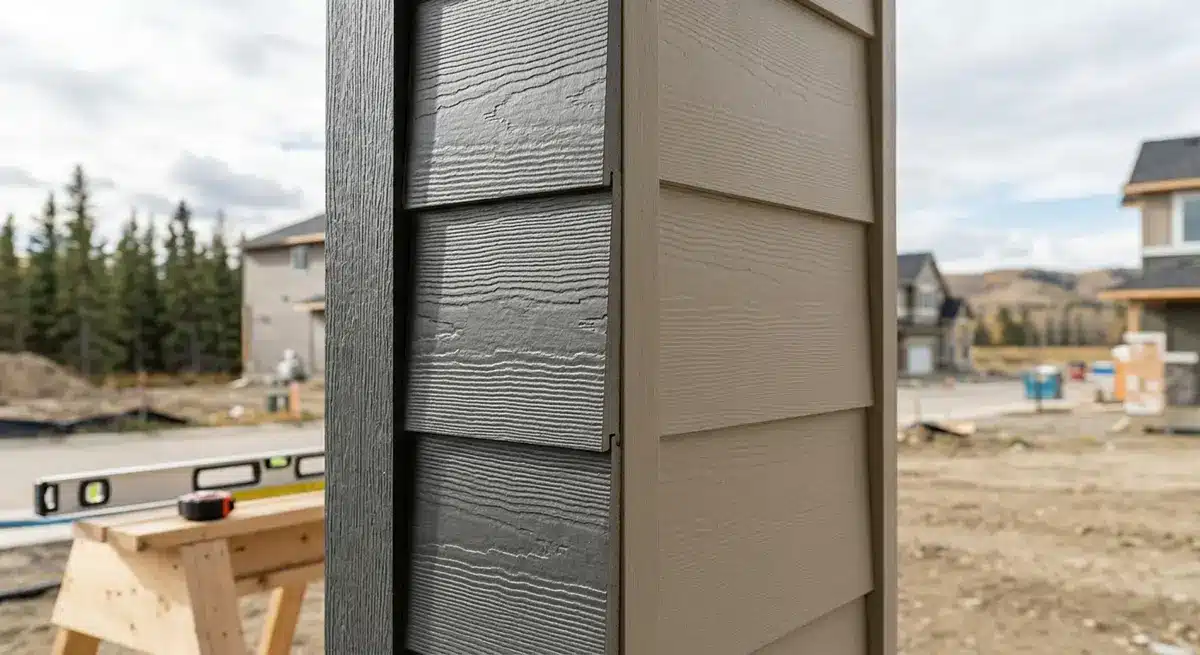
The primary advantage of fiber cement is its absolute resilience. It is impervious to wood-boring insects, highly resistant to rot, and non-combustible, which is a significant benefit for homes built near wildland-urban interfaces. Most importantly, it offers exceptional hail resistance. While it requires painting every 15 to 20 years, factory-finished options come with baked-on colors that resist UV fading far better than traditional exterior paints.
Acrylic and Traditional Stucco
Stucco remains a highly popular choice, particularly for contemporary and modern architectural styles. However, the technology has evolved. Traditional cement stucco is highly durable but prone to hairline cracking during freeze-thaw cycles. Enter acrylic stucco, which incorporates synthetic polymers to provide flexibility.
Acrylic stucco systems, often applied as part of an Exterior Insulation and Finish System (EIFS), provide a continuous layer of insulation around the home. A properly installed acrylic stucco exterior boasts a lifespan of 40-50 years. It is highly customizable in terms of color and texture, though it requires professional installation to ensure the rain screen drainage plane is perfectly executed.
Vinyl Siding (Standard vs. Insulated)
Vinyl siding remains the most cost-effective option on the market. While older generations of vinyl were criticized for looking cheap and cracking in extreme cold, 2026 manufacturing standards have vastly improved the product. Premium vinyl siding is now engineered to withstand wind loads of up to 130 km/h.
For Alberta’s climate, insulated vinyl siding is highly recommended. This product features a backing of rigid foam insulation that not only increases the material’s impact resistance against hail but also improves the wall’s thermal performance, adding an R-value of R-2.0 to R-2.5. However, buyers should be aware that even premium vinyl can melt if exposed to intense reflected sunlight from neighboring low-E windows.
Engineered Wood Siding
Engineered wood, such as LP SmartSide, offers the authentic look of natural wood without the exhaustive maintenance. It is manufactured by treating wood strands with zinc borate to resist rot and insects, then binding them with exterior-grade resins. Engineered wood is incredibly tough; it is rated to withstand -50°C temperatures and offers superior impact resistance compared to fiber cement.
“We are seeing a massive shift toward fiber cement and engineered wood in 2026,” notes Sarah Jenkins, Senior Construction Manager at Prairie Custom Builds. “Homeowners are willing to pay a premium upfront to avoid hail damage claims later, and engineered wood provides that protection while delivering a warm, natural aesthetic.” Premium engineered wood products typically carry 30-year warranties, making them a secure long-term investment.
Stone and Brick Veneer
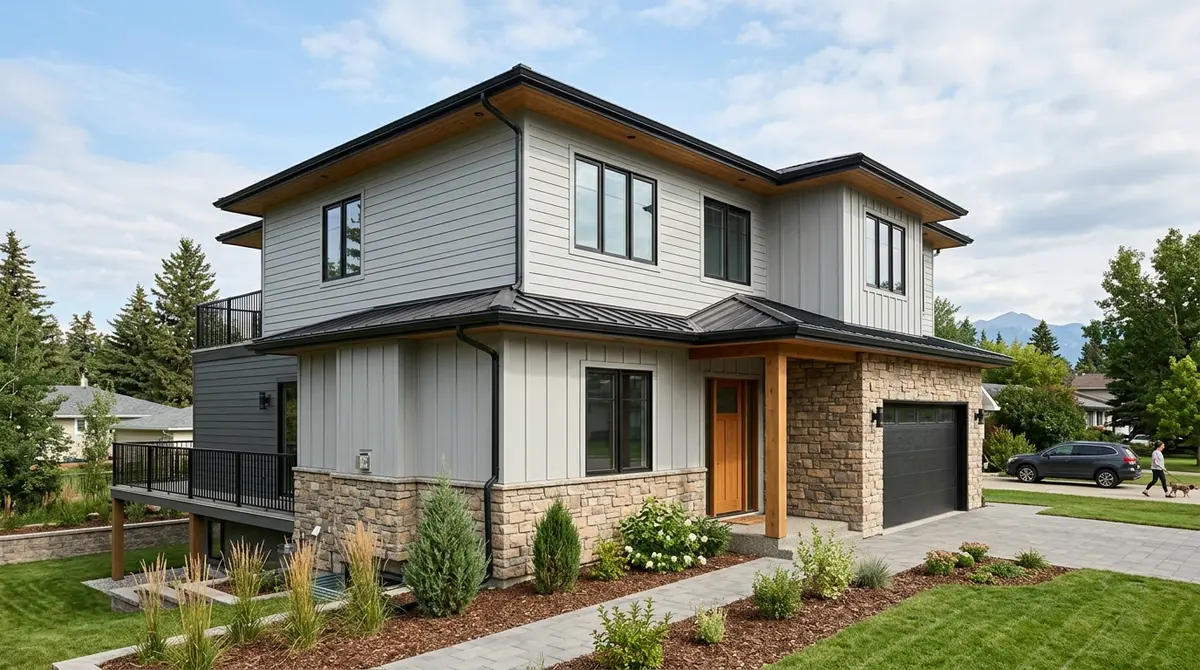
Masonry adds unparalleled elegance and permanence to a home. While full-bed brick and stone are rare in modern residential construction due to weight and cost, manufactured stone veneer and thin brick are incredibly popular. These materials are typically used as accents on the front elevation, pillars, or lower wainscoting.
Stone veneer adds approximately 15-20% to the total exterior budget compared to standard siding, but it requires zero maintenance and is virtually indestructible by weather. When forecasting construction materials costs, buyers should allocate a specific masonry allowance to ensure they can meet community architectural guidelines.
Comparing Exterior Materials: Cost, Durability, and Maintenance
To help you make an informed decision, the following table compares the primary exterior finishes based on 2026 market data in Alberta.
| Material | Cost per Sq Ft (Installed) | Hail Resistance | Maintenance Level | Lifespan |
|---|---|---|---|---|
| Standard Vinyl | $4.50 – $6.00 | Low to Moderate | Low (Wash annually) | 20-30 Years |
| Insulated Vinyl | $6.50 – $8.50 | Moderate to High | Low | 25-40 Years |
| Fiber Cement | $9.00 – $13.00 | Very High | Moderate (Paint 15-20 yrs) | 50+ Years |
| Engineered Wood | $8.50 – $12.00 | Excellent | Moderate (Paint 10-15 yrs) | 30-50 Years |
| Acrylic Stucco | $11.00 – $15.00 | Moderate | Low (Inspect for cracks) | 40-50 Years |
| Stone Veneer | $25.00 – $35.00 | Excellent | Very Low | 75+ Years |
How to Choose the Right Exterior for Your Custom Home
Selecting the perfect cladding involves more than just picking a color from a brochure. Follow these steps to ensure your choice aligns with your budget, climate needs, and community rules.
- Assess Your Local Microclimate: If you are building in a high-risk hail zone (like Airdrie or north Calgary), prioritize fiber cement or engineered wood. If you are building in an open rural area exposed to high winds, ensure your siding choice has a high wind-load rating.
- Review Architectural Guidelines: Before falling in love with a specific look, obtain the developer’s architectural controls. These documents dictate permissible materials, color palettes, and masonry requirements.
- Evaluate Your Maintenance Capacity: Be honest about your willingness to perform upkeep. If you want a “set it and forget it” exterior, stone veneer and premium vinyl are excellent choices. If you don’t mind repainting every couple of decades, fiber cement offers a premium look.
- Factor in Thermal Performance: Consider how your exterior finish contributes to your home’s overall insulation. Upgrading to an EIFS stucco system or insulated vinyl can significantly reduce your winter heating bills, a crucial factor when managing winter construction challenges.
Navigating Architectural Controls and Developer Guidelines
In Alberta, the aesthetic of new subdivisions is heavily regulated. Approximately 85% of new master-planned communities enforce strict architectural controls. These guidelines are designed to maintain a cohesive streetscape and protect property values, but they can significantly impact your exterior finish choices.
“Architectural controls in new subdivisions dictate everything from the percentage of masonry required to the approved color palettes, ensuring neighborhood cohesion and protecting property values,” states Elena Rostova, Director of Urban Planning for the Calgary Developers Association. For example, a community might require a “Craftsman” aesthetic, mandating the use of horizontal lap siding, prominent wood trim, and a minimum of 30% stone coverage on the front elevation.
When working with a builder, it is vital to understand your design customization limits early in the process. Production builders typically offer pre-approved exterior “packages” that already comply with community guidelines, whereas custom builds require submitting your exterior elevations to the developer for architectural approval before a building permit can be issued.
The Role of Building Envelope and Insulation
The exterior finish you see is only the outermost layer of a complex system known as the building envelope. In 2026, building science emphasizes the importance of managing moisture and thermal bridging behind the cladding.
According to the National Research Council Canada, modern building codes require a rain screen system. “The rain screen principle is non-negotiable in modern construction,” explains Dr. Robert MacLeod, Building Envelope Specialist at the University of Calgary. “It allows moisture that penetrates the primary cladding to drain away, preventing catastrophic rot in the structural framing.”
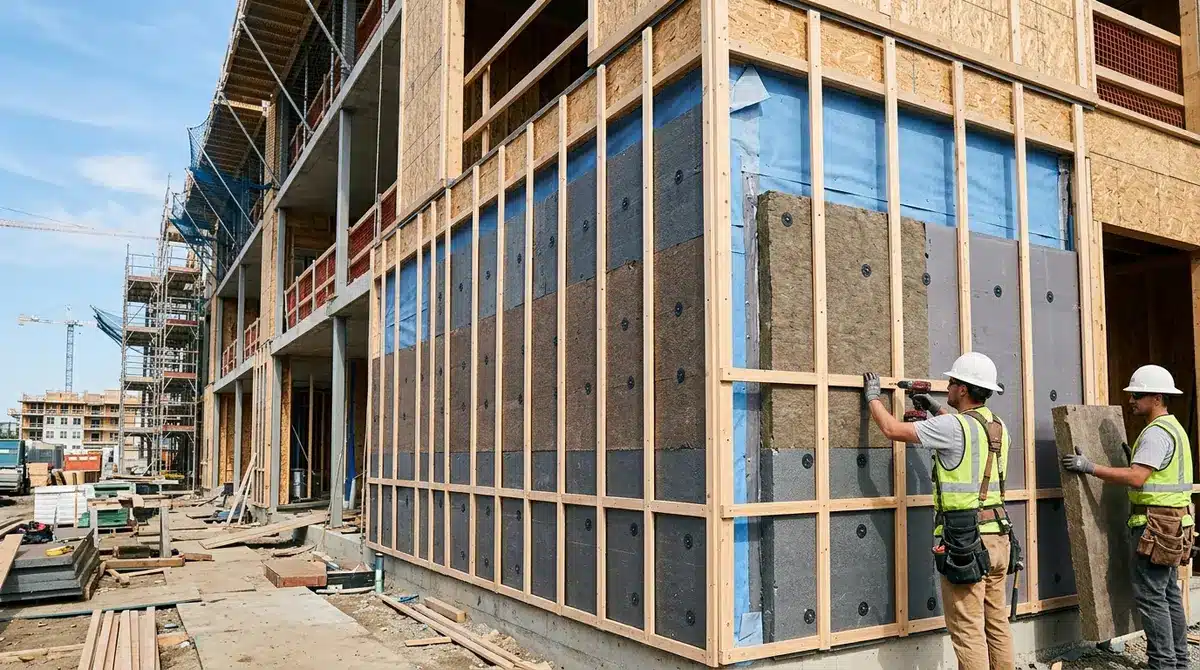
In Alberta, a rain screen gap of 10mm is standard practice. This gap is created by installing vertical strapping over the weather-resistant barrier (like Tyvek) before attaching the siding. This airspace allows water to drain down and out through weep holes, while also providing ventilation to dry out any residual dampness. Furthermore, continuous exterior insulation—often rigid mineral wool or EPS foam—is increasingly common to meet the stringent energy efficiency requirements of the 2026 National Building Code (Alberta Edition), significantly reducing the environmental impact of new home construction.
Frequently Asked Questions (FAQ)
What is the most durable exterior finish for Alberta homes?
Fiber cement and engineered wood are considered the most durable options for Alberta’s climate. They offer exceptional resistance to hail, extreme temperature fluctuations, and high winds, while also being highly resistant to rot and pests.
Does dark siding fade faster in Alberta?
Yes, due to Alberta’s high elevation and intense summer UV index, dark-colored standard vinyl and traditional paints can fade significantly over 10-15 years. If choosing dark colors, opt for factory-finished fiber cement or engineered wood with baked-on, UV-resistant coatings.
Can I change my exterior finish after signing a build contract?
Changing exterior finishes after contract signing is difficult and often costly. It requires a change order, potential re-approval from the community’s architectural control committee, and may affect your zoning and lot compliance if the new material alters the building’s footprint or fire rating.
Is stucco a good choice for cold climates?
Acrylic stucco is an excellent choice for cold climates like Alberta because the synthetic polymers allow the material to flex during freeze-thaw cycles, preventing the cracking commonly seen in traditional cement stucco.
How much does stone veneer add to the cost of a new build?
Incorporating stone veneer typically adds 15% to 20% to the total exterior finishing budget. While expensive, it provides a high return on investment, zero maintenance, and is often required by community architectural guidelines.
What is a rain screen and why do I need it?
A rain screen is an air gap (usually 10mm) created between the exterior cladding and the home’s weather-resistant barrier. It is essential in Alberta to allow any wind-driven rain or condensation that gets behind the siding to drain away safely, preventing structural rot.
Conclusion
Choosing the right exterior finishes for your new Alberta home requires balancing aesthetic desires with the harsh realities of the province’s climate. By understanding the strengths and limitations of materials like fiber cement, acrylic stucco, engineered wood, and insulated vinyl, you can make an informed decision that protects your investment for decades to come. Always factor in your local microclimate, adhere strictly to your community’s architectural controls, and ensure your builder employs modern rain screen and building envelope practices.
If you are planning a new build and need expert guidance on selecting the best materials, navigating builder contracts, or understanding community guidelines, we are here to help. Contact us today to speak with our Alberta new home construction experts and ensure your dream home is built to last.


