



Evaluating a blueprint for a new build requires analyzing spatial flow, structural constraints, natural light orientation, and long-term lifestyle adaptability. A successful assessment moves beyond basic room dimensions to calculate usable square footage, identify circulation bottlenecks, and ensure the layout aligns with both daily routines and future resale value. By systematically reviewing architectural schematics before construction begins, buyers and investors can prevent costly mid-build modifications and ensure the final structure meets their exact operational requirements.
Key Takeaways
- Circulation Efficiency: Hallways and transitional spaces should consume no more than 10-12% of total square footage to maximize usable living areas.
- Structural Awareness: Identifying point loads and plumbing stacks early prevents unexpected bulkheads and layout compromises.
- Future-Proofing: Assessing a layout for multi-generational living or secondary suites significantly increases long-term property ROI.
- Site Integration: A blueprint must be evaluated in the context of lot orientation, maximizing southern exposure for natural light and energy efficiency.
- Zoning Compliance: Layouts must align with municipal setbacks, lot coverage limits, and local building codes.
The Fundamentals of Spatial Flow and Functionality
The most critical aspect of reviewing a residential schematic is understanding how human traffic will move through the space. Spatial flow dictates the subconscious comfort of a home. When sightlines are obstructed or circulation paths cut directly through conversation areas, the property will feel cramped, regardless of its actual size.
Analyzing Circulation Zones vs. Usable Space
Architects divide floor plans into two distinct categories: circulation zones (hallways, entryways, stair landings) and usable spaces (living rooms, bedrooms, kitchens). According to 2026 data from the Royal Architectural Institute of Canada (RAIC), optimizing circulation paths can reclaim up to 12% of a home’s total square footage for active use.
When reviewing a layout, trace the most common daily routes. For example, the path from the garage to the kitchen pantry should be direct and unobstructed. If carrying groceries requires navigating around a kitchen island or through a formal dining space, the circulation flow is fundamentally flawed. Buyers must also consider design customization limits when working with production builders, as altering load-bearing circulation paths may not be permitted.
Sightlines and Natural Light Optimization
Fenestration—the arrangement of windows and doors—plays a massive role in how a layout feels. A well-designed schematic leverages sightlines to draw the eye outward, creating an illusion of expansive space. Stand at the designated entry point on the blueprint and draw a straight line to the furthest visible window. Uninterrupted sightlines elevate the aesthetic value of the property.
Furthermore, orientation matters. Research from the Canadian Home Builders’ Association (CHBA) indicates that homes optimized for southern exposure command a 22% premium in perceived buyer satisfaction due to increased natural light and passive solar heating. Ensure main living areas face south or west, while utility rooms and garages are relegated to the north.

Structural and Technical Considerations for 2026
A common mistake buyers make is treating a blueprint purely as a two-dimensional map of rooms, ignoring the three-dimensional structural and mechanical realities that bring the building to life. Understanding the skeleton of the house is paramount.
Load-Bearing Walls and Open Concept Limitations
While expansive open-concept living areas remain highly desirable, they require significant structural support. Point loads, steel I-beams, and engineered floor joists dictate how wide a space can span without vertical interruption.
As Marcus Thorne, a Senior Structural Engineer at BuildTech Solutions, explains: “Clients often want a 30-foot uninterrupted span in their great room, but they fail to account for the massive teleposts required in the basement to support that load. Evaluating a main floor layout without simultaneously reviewing the basement foundation plan is a recipe for post-construction regret.”
Plumbing Stacks and HVAC Routing
Mechanical systems require physical space. HVAC plenums, return air ducts, and plumbing stacks must travel from the basement to the upper floors. If these are not carefully integrated into the initial schematic, builders are forced to create unsightly dropped ceilings or bulkheads in living areas.
Always ask the builder to overlay the mechanical and electrical drawings onto the architectural layout. Ensure that second-floor bathrooms are stacked directly above main-floor walls or utility spaces to simplify plumbing drops. Proper planning here also ties into sound insulation upgrades, as poorly routed PVC plumbing pipes can create significant noise transfer between floors.
Evaluating Layouts for Investment and Multi-Generational Use
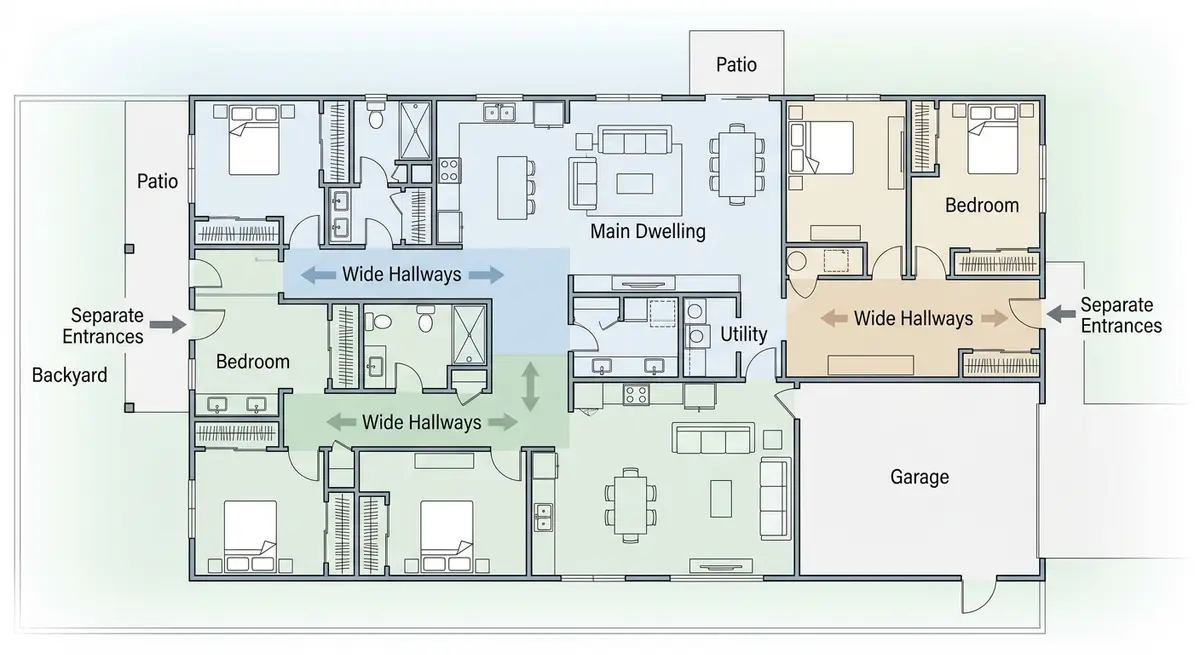
In 2026, the definition of a single-family home has evolved. Economic factors and shifting demographics mean that a layout must be adaptable. Whether you are an investor looking to maximize rental yield or a family planning for aging parents, flexibility is a core metric of evaluation.
Basement Development Potential
A layout’s true value often lies beneath the main floor. When assessing a blueprint, examine the placement of the basement stairs and the mechanical room. If the furnace and water heater are located squarely in the center of the basement, developing the space into a functional secondary suite becomes incredibly difficult and expensive.
Look for layouts where the mechanical room is tucked into a corner and the stairwell allows for a separate side entrance. This configuration is essential for maximizing basement development options, allowing for legal secondary suites that generate rental income without compromising the privacy of the primary residence.
Accessibility and Aging in Place
Future-proofing a property requires foresight into mobility needs. Even if not immediately required, integrating accessibility features into the initial blueprint adds significant long-term value. Evaluate the width of hallways (aiming for a minimum of 42 inches) and doorways (36 inches). Check if the main floor includes a full bathroom and a room that could easily be converted from an office into a primary bedroom.
Step-by-Step Process for Reviewing Builder Blueprints
To systematically assess a residential schematic, follow this structured, chronological approach to ensure no detail is overlooked:
- Verify Site Orientation: Place the blueprint on the site plan. Determine where the sun will rise and set relative to the primary living spaces. Ensure the driveway and entrance make sense for the street layout.
- Measure Furniture Clearances: Do not trust the miniature furniture drawn on builder plans—they are often scaled down to make rooms appear larger. Use a scaled ruler to draw your actual furniture dimensions into the living room and primary bedroom.
- Trace the “Work Triangle”: In the kitchen, draw lines connecting the sink, refrigerator, and stove. The total distance of this triangle should be between 13 and 26 feet. If it is larger, the kitchen will be exhausting to cook in; if smaller, it will feel cramped.
- Assess Storage Distribution: Calculate the square footage of closets, pantries, and utility rooms. A 2026 survey by the National Research Council of Canada found that 68% of new home buyers cite “insufficient storage” as their primary regret within the first year of occupancy.
- Review Exterior Elevations: Cross-reference the 2D layout with the exterior elevation drawings. A window that looks perfectly centered on the inside might look completely asymmetrical from the street.
Common Layout Mistakes to Avoid
When analyzing schematics, certain red flags indicate a poorly optimized design. Recognizing these early can save tens of thousands of dollars in renovations down the line. Below is a comparison of sub-optimal features versus their optimized counterparts.
| Design Element | Sub-Optimal Layout (Red Flag) | Optimized Layout (Green Light) |
|---|---|---|
| Bathroom Placement | Powder room door opens directly into the kitchen or dining room. | Powder room is tucked into a transitional hallway or mudroom for acoustic privacy. |
| Primary Suite | Shares a wall with the main living room TV or children’s bedrooms. | Separated by walk-in closets or en-suites acting as acoustic buffers. |
| Entryway | Front door opens directly into the living room with no defined foyer. | Distinct foyer with a coat closet and visual separation from relaxation zones. |
| Laundry Location | Basement laundry in a two-story home, requiring carrying baskets down two flights. | Second-floor laundry room near primary bedrooms, complete with floor drains. |
Adapting Plans to Regional Climates and Zoning
A layout that works perfectly in a temperate coastal city may fail miserably in a region with harsh winters and specific municipal constraints. Regional adaptation is a crucial step in the assessment process.
Winter-Ready Entrances and Mudrooms
In colder climates, the mudroom is arguably the most important transitional space in the home. Evaluating a layout requires ensuring the mudroom is large enough to accommodate heavy winter gear, wet boots, and seating. Managing winter challenges starts at the architectural level. Look for layouts that include a walk-through pantry connecting the garage mudroom to the kitchen, minimizing the distance cold air can travel into the main living spaces.
Lot Size and Setback Compliance
Finally, a brilliant schematic is useless if it cannot legally be built on your chosen lot. Municipalities enforce strict rules regarding how close a structure can be built to the property lines (setbacks) and what percentage of the lot the building can cover.
Before finalizing any architectural decisions, you must cross-reference the building’s footprint with local zoning regulations and lot sizes. If you are deciding between semi-detached or detached builds, the lot coverage allowances will drastically alter the maximum allowable square footage of your main floor.

Frequently Asked Questions (FAQ)
How do I know if a floor plan has good flow?
Good flow is achieved when you can walk from one primary space to another without navigating around furniture or cutting through the center of a conversational area. Hallways should be minimized, and sightlines from the entryway should extend smoothly to the rear of the home.
What is the ideal size for a primary bedroom?
In 2026, the industry standard for a comfortable primary bedroom is a minimum of 14×16 feet (224 square feet), excluding the walk-in closet and en-suite. This allows ample room for a king-sized bed, two nightstands, and a dresser without impeding circulation.
Can I move load-bearing walls on a builder’s blueprint?
Moving load-bearing walls is technically possible but highly expensive, as it requires structural re-engineering, larger steel beams, and potentially deeper foundation footings. It is always more cost-effective to select a layout that already meets your open-concept requirements.
Why is the location of the mechanical room important?
The mechanical room houses the furnace, water heater, and electrical panel. If placed in the center of the basement, it fragments the remaining space, making it difficult to build a functional secondary suite or large recreation room. Corner placements are always preferred.
How much square footage should be dedicated to storage?
Architectural best practices suggest that 10% to 15% of a home’s total square footage should be dedicated to storage. This includes walk-in closets, kitchen pantries, linen closets, and dedicated utility storage spaces.
Should I choose a layout with a second-floor laundry room?
Second-floor laundry rooms are highly recommended for two-story homes, as they place the appliances near the source of the laundry (bedrooms). However, you must ensure the blueprint includes a floor drain and enhanced soundproofing to prevent vibration noise.
Conclusion
Assessing a residential blueprint is a multi-faceted process that requires balancing aesthetic desires with structural realities and long-term functionality. By meticulously analyzing circulation zones, optimizing for natural light, and ensuring the layout accommodates future adaptations like secondary suites or accessible living, you safeguard your investment. Remember that paper is cheap, but concrete and lumber are expensive—the time to perfect your layout is long before the first shovel hits the dirt. If you need expert assistance reviewing your architectural schematics or navigating local zoning requirements, contact our team today to ensure your next build is perfectly aligned with your goals.


